Memoirs of a Ranger - Lambe Arkolyn

Character Biographies, Journals, and Stories

Moderators: Moderator, DM

User avatar
Lambe
Posts: 509
Joined: Tue Jan 26, 2010 5:38 pm

Re: Memoirs of a Ranger - Lambe Arkolyn

Unread post by Lambe »

4 - 44

Image

To bring back a burden is not the same as mending what was broken.

Ivan carried the Unicorn back into the Grove after we found her by the river. I can still see that more clearly than I’d like. Her blood had been taken. Her horn was gone. The Shadow Druid’s words were still fresh in us, and the mud of the riverbank had not yet dried from our boots. We brought her home because leaving her there was worse.

There was not much I could do. My throat was still wrapped from Kaltyra’s bite, and my strength came and went like a poor lantern in wind. I walked and stood because I still could. When Ivan lowered her near the place chosen for burial, between the great tree and the waterfall, the Grove seemed to go still around us.

That was right, if anything about it could be called right. The tree had watched over the heart of the Grove longer than most of us had known its paths. The water gave sound where words failed. I do not know what Ivan said over her. I know he offered what prayer he could. Mendel stood nearby, and Alyndra was there with us, having seen what waited by the river. Nai was in the Grove when we brought the Unicorn home. Her grief was its own creature after that, and I won’t pretend to measure it. The Unicorn had been more to her than a guardian. She had been friend, pack mate, and something almost older than either word.

Until then, the Unicorn had belonged more to the Grove than to any telling of mine. We did not make her safer by speaking of her where any curious ear could hear. She had simply been there, part of the place’s shape, old enough that I thought of her less as a guest than as one of its truths. Then there was a grave where that truth had stood.

Soon after the river, close enough that memory gives no clean edge between one hurt and the next, the Circle began trying to put its hands around what had happened. It was not a normal gathering. Normal things had little say after the mound was raised. People came because Ivan’s report could not be ignored, because the Shadow Druid had named the Purge, because the dream had been shared, and because no one wished to be the one who waited too long.

I was on my way toward that business when Kaltyra found me. Perhaps she had waited for me. Perhaps she only guessed my path. I have had enough years since then to wonder over small details that mattered little at the time. She came near enough to speak, and I had my sword in hand. Sora stood at my side. That was not ceremony. It was not bravado. It was sense.

Kaltyra saw the anger without my needing to spend words on it. She had lived too much of her life close to claw, fang, and blood to miss such a thing. I was standing still because movement would have chosen too much for me. My throat was not made for shouting then, and I was never much for outbursts.

That was when I noticed what she had brought.

The locket.

I had not known where it had gone after the bite. In the grass, in the mud, in Kaltyra’s hand, under someone’s boot while they tried to keep me alive. I had thought through all of those and liked none of them. The little flower had been missing from my chest, and with it had gone one of the few pieces of Flora I could still touch. When I saw it, the sword felt heavier. The chain was broken and muddied, and the little flower looked too small in Kaltyra’s hand.

Kaltyra tossed it to me. I caught it with my free hand, the sword still held in the other. My fingers closed too hard around the broken chain. Some of that was weakness and some was anger, but more than either was the old wound opening in a place I had not expected. Flora had been gone for years. A man can learn to live around such a loss, but he never owns all the doors it may use to enter him again.

Kaltyra knew what she had done to me. I will not dress it up into more tenderness than I felt. There was no clean forgiveness in that moment. There was barely room for speech. She stood before me as the woman who had returned my locket and the beast who had nearly torn the life out of my throat. Both were true. She knew Ivan’s magic had stood between me and death. She spoke of regret and blood-debt. Two prices, mine to name. One had already been named, for her to stay away from the lich bound up in her troubles. The other stood between us now.

The Circle needed answers. I could have asked Kaltyra for something meant only to hurt her. It had crossed my mind then, and I had enough cause. Instead I asked for what she knew of the Shadow Druids.

That frightened her. Not me alone. Not even Sora, though Sora made no effort to look harmless. Her fear went deeper than the moment. It had the look of old snares and old cages, of choices made badly and enemies that had not forgotten her. Kaltyra was dangerous. She was afraid all the same.

She gave what she could. Not a neat answer. Not a path laid clear from root to river. Her knowledge was partial, and much of it came from her own troubles rather than ours. Habits she had noticed. Materials she knew they favored. Days or signs that mattered to them. The sort of thing that might mean little alone, but could matter later beside a track, a wet stone, or a bit of ash. I listened more than I spoke. My throat made a poor tool, and I did not want to waste what little she was willing to give.

Even then, nothing about her came clean. She spoke often enough of the Balance, and she was Grumbar’s. I do not say that as insult. Earth has weight. Stone holds its shape. Oaths matter to the Earthlord, and change is not welcomed for its own sake. In many ways, she should have fit the Circle. She had been one of us once, and not by mistake. There was a strange thing in that. Kaltyra hated change as fiercely as any servant of Grumbar might, but she seemed to think striking first was the same as standing firm. Whatever tie Kaltyra had to the Balance came through the druid’s path and through her own judgment, and that was where the trouble had always lived. Her judgment had teeth. I had felt them.

The Circle’s way was not always clean. We had delayed when perhaps we should have moved. We had failed to mend every wound that later bled into worse. Still, our service was not meant to answer one temper. The Shadow Druids saw restraint and called it cowardice. Kaltyra had done much the same in her own way. Some of the accusation found meat. Some of it only wanted blood.

Before she left, Kaltyra asked one thing of me. She wanted Celduil told that she wished to meet him alone. That request sat poorly with me. Celduil was High Ranger. Sending him alone toward Kaltyra, after what she had done to me, was not a small favor carried between acquaintances. Yet I had asked her for knowledge under the shape of a debt, and she had given what she was willing to give. If I was going to refuse her request, it needed to be for a better reason than my anger.

I told her I would carry the message. No promise of safety. No promise of trust. Only that I would pass the words on. Anger was still there, close enough to my hand that I could feel it in the grip of the sword. I had given my word. Anger did not change that.

Others were drawing near by then. The day’s business had begun to gather around us, and Kaltyra noticed before I needed to warn her. Whatever courage had carried her to me began to fail. I saw her measure the shape of more than one Circle member approaching, and I saw what she thought it meant. She had not come to stand before the Circle. She had come to return what she had taken, speak what she dared, and leave before judgment learned her scent. She left quickly.

I stood a while later with the locket in hand and Sora at my side. It should have felt like relief. It did not. The locket was back. Flora was not. Kaltyra had returned what was mine, but she had not unmade the bite. The little flower lay in my palm, small and familiar, and I hated how much comfort it still had power to give me.

When I reached the others, I passed along Kaltyra’s information first, then her request for Celduil. I do not know how rough the words came out, but Celduil heard enough.

Tyn brought back another burden soon after. He returned from Cloakwood bloodied and beaten. Much of what he learned came to me through his account rather than my own eyes. He had gone looking for Shadow Druids and found one willing to say enough. If the Unicorn was dead, then nothing was coming. It was already here. The force moving against us was ancient, and it would run over the land until things were as they once were.

The Shadow Druid blamed the Circle. He named the burning of the Sharpteeth by Black Orcs, the lizardfolk beaten and raided, their eggs stolen, the wolves driven out. He spoke of our inaction as if the whole wound of the land could be laid at our feet. It would be easier now to say he lied. He did not need to lie about everything. There had been failures enough to gather and sharpen.

That was the worst part. Some of it was true enough to hurt, which made it easier for him to use.

The lizardfolk mattered. The stolen eggs mattered. The Shadow Druids had their own story for why the Circle deserved to be cast aside, and they had found an old force willing to make their anger useful.

The Unicorn’s grave did not feel like an ending after that. I had the locket back, but I kept touching it like I expected it to be gone again. Tyn had returned alive. That should have been better news than it felt. Each thing brought back to us only showed another place where something had been broken.

We did not yet know the full pattern. We did not know how many more guardians were at risk. We only knew the Grove’s guardian had been taken first, and that the ones who took her were not done.
User avatar
Lambe
Posts: 509
Joined: Tue Jan 26, 2010 5:38 pm

Re: Memoirs of a Ranger - Lambe Arkolyn

Unread post by Lambe »

4 - 45

Image

The beast had a name.

I thought first of Varak when I wrote that. Men have a way of making monsters out of what waits in the deep, wet parts of the woods. Lizardfolk were easy to make into such things if a man was careless, frightened, or too certain of his own stories. We knew the danger. We went anyway, hoping words would hold.

Celduil led, with Nai near enough to speak when speaking became necessary. Mendel was there, and Celdor, Ivan, Alyndra, and me. Those are the ones that stayed with me. I was still not whole from Kaltyra’s bite. My throat remained wrapped, and my strength went out at odd times. I went anyway.

Tyn’s report had made the lizardfolk impossible to ignore. The Shadow Druid had spoken of them, of eggs stolen, of raids, of old wrongs brought up again as accusation. We had heard enough by then to know that the Purge was not moving through empty ground.

Cloakwood was damp that day. I remember that more than the sky. Wet air under leaves. Old mud. The way sound seemed to sink before it traveled far. Celduil kept us ordered without making a show of it. He did not speak more than he needed. Mostly he watched the line and let us see where his attention went.

We found the cave system where the lizardfolk had made their hold. The passage bent more than once. Some of it may have been mine workings once, or natural stone opened wider by water and claw. Close walls came first, then stale water, then the feeling of eyes where torchlight did not reach. The lizardfolk did not attack us at the mouth, though I would not call that mercy. Celduil had brought enough of us that a fight would have cost them, and Varak had words he wanted placed before the Circle.

So they watched us. They measured bows, blades, hands, and faces. They stood with spears near enough to use. Nai and Ivan did much of the calming, or as much calming as can be done when neither side has reason to trust the other. I stayed quiet unless there was need. Mostly it hurt to speak.

One of them led us deeper through low stone and wet footing. I did not know his name then. Later I would know him as Krill’acha. He was younger than most of the others, or seemed so to me, and there was something restless in the way he looked at us. Curious, maybe. Too curious for his own safety, as young ones sometimes are. At the time he was only another lizardfolk shape in the torchlight. I remember slipping once. Not falling, but enough that Mendel looked back. The cave opened after that, wide enough that the torchlight lost its edges before reaching the far walls. Lizardfolk stood along those edges. A few shifted when we entered. Claws scraped stone. Tails moved through mud. No one in our party reached for a weapon, though I doubt any hand forgot where one was.

The Lizard King sat ahead on a rough seat that served as a throne. A war axe leaned against one side of it within easy reach. There was nothing grand about either one. No worked gold, no banner, no courtly nonsense. Stone, height, and the lizardfolk around him were enough. He was larger than the others. Even if I have given him too much height with the years, he was still the first thing a man noticed. When he moved, the others listened.

His name was Varak.

The trial came back to me then, not as a whole memory, only pieces. A lizardfolk before me. A test meant to prove whether I could stand where fear wanted me to give ground. I had thought of it as danger then. Varak made that memory sit differently.

Varak was dangerous, but that was not all he was. His people stood behind him, and they were watching how we watched him. Nai spoke to him carefully. Ivan helped steady the exchange. Celduil stood as the one leading us. The rest of us listened and tried not to turn tension into blood by moving at the wrong time. Mendel looked like he wanted to ask too much at once. Alyndra kept looking past Varak, over the lizardfolk, the air, the stone. Celdor stayed quiet and watched.

Varak wanted the Circle to hear him, and he began with the admission that the thing we were pursuing was known to his people before we had a name for it. This beast, for that is what it could only be. Ancient. Older than the coming of the furs, as he put it. That word sat strangely in the cave, and I tried to decide whether he meant men, elves, dwarves, or all warm-blooded folk who had come later than his own. It did not matter much in that moment. To Varak, the thing we hunted belonged to a time before us.

He knew what the beast was, though I did not understand all of it while we stood there. The air was close, and every word had to pass through anger, old grief, and the scrape of stone around us. He spoke of the beast as tied to Malar, or as one of his aspects. He spoke of forms. A great beast, like a tyrant lizard but wrong in the ways memory keeps sharp. A body that could run on all fours when it wished. Acidic spit. Red eyes. That was what reached me first. Not the old tooth, the Moonshaes, or even Malar. It was the red eyes. The dream had burned them into us before the river ever gave us the Unicorn’s body. I did not have all the pieces yet, but I knew that fear.

After that, the pieces came unevenly. The Moonshaes, the tooth, the temple, the old killing or banishing. Ivan’s note put it in order later. In the cave it did not come that way. He said the beast had been killed or banished on the moon islands. The Shadow Druids had taken a tooth from a lizardfolk temple. That was how they had raised the beast, or called it, or opened enough of a path for it to come back into the world. The working was beyond me, but I knew enough to understand theft when I heard it. A temple had been violated.

The eggs came next, or that is how I remember it now. Varak’s anger changed when he spoke of them. It had been hard before, but this was worse. The Friendly Arm cook, he said, had been sending adventurers to steal lizardfolk eggs. The eggs were passed to the Shadow Druids. The Shadow Druids used them to raise an army. One of the lizardfolk near the wall shifted when Varak said it. Maybe that is why I remember that part.

I had heard of adventurers taking eggs before. Usually they laughed about it, or called it a job. It did not sound like that in Varak’s mouth. I was slower to anger than I should have been. Maybe because I was tired. Maybe because eggs were still only a word until I looked around at the lizardfolk watching us. The Circle had not sent those adventurers, but standing there, that answer felt thin. His people had fought the young raised against them. How much was exact and how much came through grief, I cannot say.

I thought of the Shadow Druid’s accusation against us. The lizardfolk beaten and raided. Their eggs stolen. Wolves driven from the Sharpteeth. Black Orc fire. All of it had been thrown at Tyn like a charge read before judgment. In the cavern, with Varak’s people watching us from the dark, the words were no longer only accusation. There were faces around them. Scales. Spears. A chieftain on stone.

Varak gave us three days to bring him the cook. Bring him the one who had paid for the theft and fed the Shadow Druids their army. Three days, or whatever peace stood between us and his people would thin until it tore. He did not ask us to understand him. He did not ask us to grieve with him. He wanted the man brought to answer for his crimes, and no one in that cave mistook it for a request.

Celduil took the weight of that as leader. Ivan would later leave the note in the Grove, setting the tasks in plain order. Ask the Golden Ash tree about the beast. Investigate the Friendly Arm cook. Learn what had happened in the Moonshaes years before. In the cavern, those tasks did not yet sit neat on a page.

The Golden Ash was another piece Varak gave us. He told us to ask the tree of the Sharp Teeth Woods, the one inside our Grove. We had gone into Cloakwood to face Varak, and he pointed us back toward home.

We left Varak with more than we had brought in, though it did not feel like victory. We had a demand and three days. The cook mattered first. The rest would have to wait.

The first beast I named in that chapter of my life was Varak. I had been taught, as many are taught, to see the lizardfolk of the deep woods as things apart from us. That did not make him gentle, and it did not make his spears less sharp. It only meant I had to remember that Varak had come there by his own road, same as the rest of us.

Varak gave us the word for the thing behind the dream, the red eyes, and the Unicorn’s blood.

Before the day was done, another beast had been named.

Kazgoroth.
User avatar
Lambe
Posts: 509
Joined: Tue Jan 26, 2010 5:38 pm

Re: Memoirs of a Ranger - Lambe Arkolyn

Unread post by Lambe »

4 - 46

Image

Smoking is bad for a man’s health.

That was true in the ordinary way, I suppose. It was truer still for the Shadow Circle cook, who chose the wrong moment to step outside with his pipe.

I did not see Celduil take him. That should be said early. I was not there. I was not crouched beside the wall with him. I did not have the cook by the collar. I did not hear whatever sound the man made when he found out his smoke break had gone wrong. Celduil told that part afterward in his usual way, plain enough that I suspected he had left out the worst of it.

The cook had stepped out into the courtyard of the Friendly Arm while the inn was closed. Maybe he wanted a few quiet breaths. Maybe he had done it often enough that it no longer felt like risk. Men grow careless around their own habits. Celduil found his chance there.

He put a hand on the cook’s shoulder and took him alive.

That was the part people repeated afterward, though none of it was funny once the whole of it was known. The man had helped steal eggs from Varak’s people. He had helped feed children into Shadow Druid hands. He had helped the Shadow Circle’s work, whether or not he understood the whole of it. After all that, what undid him was wanting smoke.

How we had come to that point is another story, and not one I saw cleanly.

The cook had a locked room. Celduil did not like that, but the first hand put through that door was not his. Ivan was told to take mouse shape and slip inside. I can imagine Ivan’s face when that suggestion was made, but I was not there, so I will leave his face alone. He did it all the same.

A cloaked figure came in by magic and saw through Ivan’s shape. After that, the account grew hurried, as such accounts do. Tyn got inside. There was arcane magic, a fight, and the cook running for the guards. The man had thought the Wild Hunt would keep us busy. That meant the High Hunt, a Malarite rite already troubling the woods, not some Shadow Druid ceremony of its own. Ivan and Tyn took the man alive and got him out by way of the roof, which was the sort of detail I decided not to ask after too closely.

They brought that man to Varak. I know less of that questioning than Ivan did, and more than I wanted. Enough came out of it. The cook was Shadow Circle. The eggs were being used to divide Varak’s people. The eggs were somewhere below Cloakwood, reachable by the roots, whatever exact meaning the Shadow Druids gave that. Varak killed the man before Ivan and Tyn were done with him, then gave us a few more days to bring him the actual cook.

That was why Celduil took the cook lead after that. Ivan and Tyn could not safely go back near the Friendly Arm. If the Shadow Circle had eyes there, those eyes would be looking for a druid who had been a mouse and a dwarf who had come through the door at the wrong moment.

Celduil had the patience for watching and the rank to make others keep at it when waiting became dull. For the next few days, he watched the cook while the man went about his work in the kitchens.

That is one of the uglier parts of such business. A man can hide plenty of rot while doing ordinary work. He can stir pots, carry flour, complain about onions, and make himself useful enough that folk stop wondering why he is always near the storerooms.

My part was in Cloakwood, with Nai, Mendel, Alyndra, and a few others. We were there to make noise and keep Shadow Druid eyes looking into the trees instead of toward the Friendly Arm.

The Shadow Druids did not come at us in a clean charge. They knew the ground and used it. Brush moved where no wind touched it. Roots caught boots. A shape would break from behind a trunk and be gone before a proper shot could be taken. More than once I put an arrow where a man had been and found only bark when I reached the place after.

My arm still did not like being used hard. Kaltyra’s bite had healed on the outside, but not in any way that could be trusted. I could draw. I could aim. I could kill, if I had to. Each pull reminded me I was not whole yet.

Mendel stayed near enough that I noticed. He did not hover. That would have annoyed me, and he knew it. He simply kept ending up where a second blade or a spell might matter if my strength failed. Nai moved with anger in her steps. She had buried too much that tenday. Alyndra had gone quiet in the way druids do when the work has become harder than mercy.

We were not trying to clear Cloakwood. No one clears a forest by chasing men between trees. We were buying time. A figure in bark-colored leathers came at me from low ground, mud up to one knee, curved blade in hand. I saw his eyes first. Human eyes, or near enough. That made it worse in a way. There was no beast in them, only certainty.

I loosed before he finished rising. The arrow took him high in the chest and spun him into the brush. He made a wet, empty sound when he fell.

Another came from the left, and Mendel caught that one before I could turn properly. There was no speech between us. He did what needed doing. I gave him a nod when I had breath to spare. Somewhere to the west, Nai shouted a warning. We shifted toward her, and the fight moved again.

That was enough. Strike, withdraw, listen, move. Blood under wet air. Enough noise, enough danger in the trees, enough reason for Shadow Druid eyes to stay there while Celduil waited for his moment at the inn.

When Celduil took the cook, he did not kill him. That mattered. Varak had demanded the cook, but Celduil was not in the habit of delivering corpses when a living mouth still had use. He brought him back under guard, and for a short while the cook rested in the Grove.

Rested is the word that was used. I still do not like it. He had helped poison the world around us, and still he had a moment beneath our trees before judgment came for him. Maybe that was mercy. Maybe it was only because we still needed him breathing. I do not know. I was not there.

The Golden Ash woke while the cook was resting.

That is the part I keep coming back to. Not Celduil’s hand on the cook. Not Ivan as a mouse, or Tyn getting into the room, or the roof escape I still do not care to picture. The cook was there beneath our trees, breathing after all he had done, and the Golden Ash woke.

I was not there when it spoke. Celduil was. I cannot tell you how its voice sounded. I did not hear it, and I will not invent old-tree sounds to make the tale prettier. I know what Celduil carried back. The Ash warned him of the threat coming. It confirmed the cook was tainted.

That was enough.

The cook knew enough to be guilty and not enough to be useful. He was Shadow Circle, or close enough to their work that the difference no longer mattered. He collected the eggs, passed them along, and met another in that locked room, where the eggs were taken by magic. But he did not know where they were kept. He knew Kazgoroth only as a thing of destruction, which may have been more than enough for the sort of man he was.

After that, Tyn and Ivan appeared and treestrode Celduil and the cook to Varak. I have done plant travel enough times to know it is not as gentle as folk imagine. One moment you are under one set of branches. The next, the world has changed around you and your stomach has not caught up. However they managed the prisoner through it, the cook reached the Lizard King, as Varak had demanded.

I learned the rest when Celduil returned. The cook did not die well. Most men do not.

Varak did not give him long. That sat hard with some of us, even knowing what the cook had done. His people’s eggs had been stolen. Their young had been twisted and raised against them. There are wrongs too large for a neat answer, and Varak was not looking for one. Still, knowing a death is earned is not the same as hearing how quickly it was given.

Varak killed him, then promised aid against Kazgoroth. That was Varak as he had shown himself to us. Hard one moment, practical the next. The cook had been a debt. Kazgoroth was the greater enemy. Once one was answered, the other remained.

By the end of it, the cook was dead, the lizardfolk had promised spears, and the Golden Ash had spoken. The Circle had been named honorary members of Varak’s clan, or near enough that the meaning was clear. They meant to war against the Shadow Druids and send word when the time came.

The eggs were still missing. That was the part no one could set aside.

I remember standing there with mud drying on my boots and pain settling into my arm while the reports crossed over one another. The man from the locked room. The cook. The Golden Ash waking. Varak’s judgment. Varak’s promise. Our own work in Cloakwood, which had felt large while we were in it and smaller once we knew what it had bought.

No one had seen the whole of the day while it happened. That is often how the Circle survived. Not cleanly. Not with one person standing in the middle of the tale. Just people in different places doing the work in front of them and hoping the others were still alive when the paths came together again.

It did not make us safe. It only told us what was coming. Kazgoroth would come for the Grove next.
User avatar
Lambe
Posts: 509
Joined: Tue Jan 26, 2010 5:38 pm

Re: Memoirs of a Ranger - Lambe Arkolyn

Unread post by Lambe »

I-2

Image

A Ranger’s Wealth

A young adventurer thinks wealth is gold. An experienced one knows wealth is anything that still works after rain.

Before any coming storm, one should take stock. Not because counting makes the storm kinder. It does not. But a man should know what he has, what he lacks, and what he is pretending he does not need.

In 1349 DR, as best as memory serves, this was mine.

Worn

- A cloak given back when the Enclave still gave such things to its rangers
- A thick padded leather vest, cut for movement and patched more than once
- Boots that had cost enough to make me walk carefully for three days
- A belt with more use than beauty
- Rings I trusted only because they had not betrayed me yet
- Flora’s locket, which was not gear, no matter where it rested

The cloak had a quiet blessing in it. It helped me mend in small ways and notice things worth noticing. It still let rain down my neck. Magic has limits, it turns out.

Carried

- Bone-Crusher, a costly Nashkel bow with an ugly name and honest pull. After a long day, the name usually felt less aimed at my enemies than at me.
- An assortment of arrows, because every archer eventually learns that “enough” means “not yet tested.”
- Howling, my short blade for when distance failed. I named it that after long thought, because it howled.
- A light shield, because mobility is not always the answer. Caves teach that quickly.
- A field knife, healing kits, and a few potions I hoped were what they claimed to be.
- A fishing pole, because a man who trusts only dried meat deserves his misery.

Other Things

Straps. Rags. Cord. Flint. Needles. Bits of food too old to admit aloud. Things useful at dawn and forgotten by dusk. Things forgotten until they stabbed my hip through the pack.

The important things are the ones your hands remember without looking.

Coin

Enough to mend what broke, buy what was needed, and send some north to Lydia when the road had been kind.

Wanted

- More dry socks
- More space in the pack
- Fewer straps
- A bag of holding, because everyone wants one, and I saw no reason to be different.


Last Count

A ranger’s gear does not need to impress anyone. It needs to be where your hand expects it when the light fails. And if it cannot survive weather, mud, blood, smoke, and being dropped in the dark, it had better at least be cheap.
User avatar
Lambe
Posts: 509
Joined: Tue Jan 26, 2010 5:38 pm

Re: Memoirs of a Ranger - Lambe Arkolyn

Unread post by Lambe »

4 - 47

Image

We stood in the path of the inevitable.

I do not mean we knew that then. We did not. Most times a man only knows the road under his boots and the thing he has been asked to guard. That was where we were. Tired, bitten, angry, and still trying to make sense of pieces that had been handed to us one at a time. What else could we do, set as we were on a course that would bring us into the path of ruin?

There was no time to call everyone. Celduil had what we had learned from Varak, from the cook, and from the mess that had led us there. He was trying to turn it into next steps before the next blow came. That was how these things often went in the Circle. We rarely had the whole truth. We had enough trouble to know we had to move.

Ivan, Celduil, and Nai were there beneath the Golden Ash with me. Sora stayed close by my leg. The cook had been surrendered, and that should have felt like one matter closed. It did not. Celduil went over what we knew because someone had to. The Unicorn dead by the river. The stolen eggs. Lizardfolk children raised against their own blood. Shadow Druids moving pieces ahead of us. Kazgoroth named in Varak’s cave.

Then the Golden Ash stirred above us.

None of us had to say what we were thinking. The Unicorn had been struck down, and the Golden Ash was afraid. That was enough to make even me understand where the next blow might fall.

The Ash was awake, or near enough to it that I have no better word. Its glow moved through the bark, and its leaves shifted though no wind had come into the Grove. If it spoke, it did not speak in a way I can set down cleanly. Ivan seemed to understand more of it than I did. Nai too. Celduil heard enough to grow quieter.

Holding the Grove meant watches, warnings, paths checked, word sent where it could be sent, and Varak’s promised aid named, though I doubt any of us believed there was time enough for it. Nobody liked speaking of ways out, but a ranger knows the value of an escape path and what it means when he starts looking for one in his own home. Celduil had been speaking of the northern path when the Ash shifted again. The leaves above us trembled with no wind behind them. Sora lifted her head, ears forward first, then flat, and a low sound came from her chest. Celduil stopped with his eyes toward the trees, and only then did I understand how quiet the Grove had become. Peace leaves small sounds behind. Birds, insects, water through roots and stone. This silence had weight to it, and while Ivan turned toward the deeper green and Nai set one hand against the bark of the Ash, I smelled smoke.

It came thin at first, gray between the trunks, then darker where the brush line bent out of sight. Heat followed it a breath later. Sora growled again, deeper this time, and I had an arrow half drawn before I knew what I meant to aim at.

The first shapes through the trees were not Kazgoroth. Men and worse than men came low through the smoke, some in hides and dark leaves, some moving like they already knew our paths. Shadow Druids, servants, beasts driven ahead of something larger. I won’t swear to every face now. There was no time to sort them properly then either. The Grove turned strange at once, which sounds foolish for a place I knew so well, but that is how it was. Roots I had stepped over a hundred times caught at my boots. Fire made gaps where there had been brush.

People shouted over one another for a few breaths, and then training did what speeches could not. Celduil moved to the side where the smoke was thickest. Ivan stayed near the Ash. Nai went toward the fire. I found the nearest line of sight and drew. No one needed to name every task. We had lived too long in that Grove not to know where the paths were, where folk would run, and where a thing coming for the heart of the place would have to pass.

I loosed into the first body that came clear. The shaft struck, though I do not know if it killed. Another shape came behind it. My shoulder pulled wrong with each draw, and the smoke made my eyes water before I had time to think myself brave. The bite had left more weakness in me than I liked admitting. I had my bow, my blade, and Sora close enough at my left side that her fur brushed my leg when I shifted. That part stayed with me. Some things do, whether they are useful or not.

The Golden Ash answered before we had any hope of doing enough ourselves. Roots moved under the leaf mold and lifted earth in slow, hard waves. Branches bowed down where branches had no right to reach. The glow in the bark grew brighter, but not gentle. It threw one attacker aside so hard I lost sight of him in smoke and leaves. For a few breaths, maybe less, I thought we might hold. A man can think foolish things at the start of a fight. Sometimes he needs to, just to keep his feet moving.

I saw Ivan change near the Ash’s light, or saw enough of it. One moment he was where Ivan had been, and then there was scale and wing and a dragon’s head turning through the smoke. Even that did not make the Grove feel large enough.

Nai became water. That sounds like a poor telling, but I have no cleaner way to put it. One moment she was near the Ash, and the next she was a moving shape of water and force, throwing herself at flames that crawled too quickly through brush and roots. Steam burst where she struck. Fire died in one place and caught in another. She was trying to keep our home from burning around us.

Image

The hydra came in with the fire behind it. Three heads, each snapping at a different sound. It was not the greatest thing there, but it was the one nearest me, and that is how fear measures a battlefield. Celduil called from my right, and I moved because his tone had become command more than words. I put an arrow into one throat as another head swept low through the smoke. My shield came up badly. The blow took me off balance and drove pain through my neck and shoulder until my fingers nearly opened.

That was when I saw Kazgoroth.

He was not the tyrant-lizard shape I had expected from Varak’s telling. He walked like a man who had forgotten how, stretched tall and crowned in horns, covered in black ichor that moved as if it had a life of its own. Firelight clung to him, then seemed to fail. He stood near the edge of the Ash’s light. He did not hurry. That bothered me more than his size.

I shot at him. Of course I did. The arrow hit black hide or black ichor, I could not tell which, and it meant about as much as throwing a thorn at a bear. He did not even look my way.

The Ash knew him. I cannot prove that, and I would not know how to if asked, but I was there. The old tree bent toward him, and the ground between them broke open as roots surged forward. Kazgoroth raised one arm. Blackness moved across it, thick and shining. The first roots struck him and jerked back, or broke away. The next held longer. Ivan came at him from the side in dragon shape, and for a moment I could not tell what was smoke, steam, gold light, or black ichor.

My part of the fight was lower and meaner. Smoke, legs, teeth, embers on my arms. I got my blade out and cut at something that came too close. It may have been a man. It may have been a beast on two legs. I remember wet fur burning, which is a useless thing to remember, but there it is. Sora drove into it before it reached me, and together we forced it back long enough for an arrow from somewhere to take it high in the chest. Celduil’s, I think. I did not look to be sure.

The hydra turned then, or one head did. That was the trouble with the thing. You could hold one danger in front of you and still have two more coming from the sides. I had stepped into bad ground, half ash, half root. Something struck my shield and numbed my arm. I went down on one knee, angry more than afraid for one stupid breath, because I knew I was too slow and could feel it happening. Sora came across my front in a rush of brown fur and old loyalty, putting herself between me and the hydra. One head snapped down and caught her. Another struck almost at once. I remember the sound she made, and my hand closing on nothing. I got my feet under me then, when it no longer mattered, and drove my blade at the nearest neck with everything I had left. The hydra pulled back from the pain or from some other blow I did not see.

Sora did not rise.

I tried to reach her. Something hit me from the side and sent me hard against a root. My breath left me. When I found it again, the smoke had thickened, and Sora was still on the ground. Too still. I kept seeing her even when I looked elsewhere.

After that, memory breaks in places and bunches up in others. Ivan’s dragon shape rose through smoke, wings half spread, then staggered under a force I could not name. Nai’s water crashed across burning roots and came apart in steam. Celduil was still standing longer than sense allowed, bow in hand, shouting us back from ground that was already lost. The Ash struck and struck again. Roots tore at the earth. Limbs broke through smoke. Gold light showed in cracks along the bark.

Kazgoroth kept coming. Not like a beast that had lost itself. He came with purpose. We gave it all we had. The Ash, Ivan, Nai, Celduil, me, arrows from folk I could not see through the smoke. It spent itself against him and still he came on. My own blade may have touched him once. I remember a shock up my arm and the taste of blood where I had bitten my tongue.

That was when I heard it.

The sunder came with a sound I still do not like remembering. It was not the sound of a tree falling in a storm. This was deeper, a split through living wood and through the ground that held it. The Golden Ash bent and fought, and then something inside it gave before the great limbs did. Light spilled from the bark and guttered. Roots tore free as if something beneath the Grove had been ripped open. I think I shouted then, but I do not know for whom.

Kazgoroth found us in the ruin after that. I do not have it in order, and I do not think order matters much there. We were spent. The Ash was broken. The ground burned in places and steamed in others. I got as far as Sora before Kazgoroth’s shadow crossed the ground. Black ichor dripped near my hand and steamed where it touched a green leaf. I tried to lift my blade. My fingers did not answer well.

He did not kill us. There is a difference between being spared and being missed. Kazgoroth had no trouble finding us and no lack of strength. He left us alive because alive could carry a wound farther than dead could.

The next part I know from what was told to me later, and from pieces that came back in fever and sleep. We had not been carried clear by Kazgoroth. We were still in the ruin when the worst had passed. Celduil found strength enough to move. He dragged us out beyond the broken heart of the Grove, one by one, away from the worst of the smoke and fire. Ivan, Nai, and me, set down outside like proof laid before a shattered door. A ranger who named himself of Doron Amar saw enough to tell Mendel after. He saw Celduil pulling us from what had been our home. He saw the ruin behind us still burning.

Mendel was not there for the defense. He came after, in dark armor, too late for the Ash and too late for Sora. The telling changed depending on who had breath enough to speak, but what matters is that Mendel came to the edge of what had been our Grove and found us alive outside it. Kazgoroth had not killed us. He had left us there to remember. Behind him, the old home burned and broke in the dark, and every time I closed my eyes, I saw Sora in the ash.
User avatar
Lambe
Posts: 509
Joined: Tue Jan 26, 2010 5:38 pm

Re: Memoirs of a Ranger - Lambe Arkolyn

Unread post by Lambe »

4 - 48

Image

Some wounds are hidden from the light.

How many times can a man get back up before he begins to wonder what getting back up is supposed to prove? I do not ask that as some tidy lesson learned with age. I had no lesson then, and no clean answer. I only remember the feeling of standing because others were still standing, walking because the work had not ended, and listening while wiser voices spoke of roots, rivers, Guardians, and corruption.

It was not that I thought myself guilty of all that had happened. I knew better than that, even then. But knowing better does not always lighten the weight.

I had failed too often by then, and always when someone needed me to do more than survive. Elohir. Kaltyra. The Grove. Sora. And many more before them. I did not lay the names out that cleanly in my head, but they were there all the same. Against a thing like Kazgoroth, what use was a man who kept being taken down?

I felt useless then, and writing this now, I can still see why. But I also see what I could not see then. Sometimes getting back up does not give a man an answer. Sometimes it only carries him far enough for the next answer to find him.

Within the next tenday of the sundering, the Circle would make more than one journey, and the first took us south.

The Circle did not stop for my doubts. They had their own wounds and their own ash under their boots. The corruption had not ended with the Grove, and Kazgoroth had not vanished because I was tired. So we gathered where we could, not in the home we had lost, but close enough to feel its absence.

There was a hill in the Sharpteeth overlooking the river. Mendel was there, and Tyn, Ivan, and Alyndra. We had to learn what had become of the Golden Ash, and we had to seek what knowledge the Moonshaes still held of Kazgoroth. We chose the Ash first, and communed with the land. I knew that prayer well enough. The druids worked it with the weight of the Circle behind them, while Mendel and I kept watch.

The answer came as a treant, slow through the trees and still healing from wounds older than ours. He had survived the Black Orcs and the ruin they brought against Doron Amar, and he knew of the Golden Ash. He spoke of a sister tree far to the south, beneath a waterfall in the Cloudpeaks, and of signs carried through root and soil that the Ash had not been destroyed outright. Harmed, yes. Driven deep into itself. Hibernating was the word that passed among us after, whether it began with him or with us. The Ash was not dead. But it was no longer here.

So south we went. There are stranger sights in a ranger’s life than a lizardman washing filthy laundry near sacred waters, though not many that come to mind as quickly. We found the sister tree beneath the fall and learned enough to know the Golden Ash could not be returned to the Grove we had lost. It lived, but it slept beyond our reach. Alyndra took seeds from that place for what would come after, and someone gave us bird meat as a gift. It was no victory, only something living placed into our hands. Looking back, I can see the mercy in that. At the time, I mostly saw another thing we could not bring home.

The seeds gave us hope, but not the answers we desperately needed. So back up the hill we went. More of the Circle had gathered near Gullykin by then. I had decided, somewhere in those days, that I ought to visit Gullykin more often when the world was not on fire.

Uriel was there before I could decide whether we had found him or he had found us. That was often the way with Uriel. He appeared at the edge of things when the path was about to become stranger, and this time he brought us farther than any road would have. Through tree, root, and green passage, we were carried from the Coast to the Moonshaes, where the name Kazgoroth was not a new terror but an old one.

A druid of those isles led us on from there. There were tense words at the High King’s court, as there often are when armed strangers arrive carrying another land’s disaster with them. What mattered was that the High King knew the Beast, and what he told us made the Grove feel smaller in the worst possible way.

As the story was told to us, Kazgoroth had done this before. Not this exact wound, not these exact names, but the pattern was old. He came as ruin given flesh. Bhaal had used him. Malar had his claim in him. There was always a source of corruption, some hidden root by which the poison spread, and there were Guardians set against him. One by one, he broke them if he could.

The End.

Well, it should have ended there. But the Shadow Druids had found some remnant of him, an old tooth if the tale was true, and from that hateful relic found a way to bring the Beast back.

That was the part that settled coldest in me. The Grove had simply been in the way. Kazgoroth had crossed from old story into our soil, and we were still missing one of the names that mattered most. We knew the Unicorn. We knew the Golden Ash. We did not know the third Guardian. And still the Beast was moving.

We came back from the Moonshaes with one thing we could act on. The corruption had a source, and if we could cut it out, Kazgoroth might be weakened enough to face.

Celduil did not wait long after that. If we were going into whatever hole held the source, we would need more than tired rangers and wounded druids. Word went to the Order of the Silver Rose, and Seth Siger and Gina Waynn answered from their keep near the Friendly Arm. Against corruption, undeath, and whatever else Kazgoroth had left guarding his root, knights of that order were no small comfort.

The others were discussing different directions while I stood quiet among them. Seeds. Moonshaes. Guardians. A source hidden somewhere in the Coast. I have told it in order because memory prefers a trail, but at the time it did not come to us in order. It came all at once, and we had to sort it while already tired.

The signs were poor at first. Water. Roots. Trees above. Something hidden below. Corruption moving where the land drank deepest. That could mean half the Coast if you let it. But the Friendly Arm had its own shadow, older than most travelers cared to remember. Before it was an inn, it had been a temple of Bhaal. Kazgoroth’s story had already carried Bhaal’s stink with it, and I had no reason to believe old murder slept cleanly just because men had built walls over it.

North of the inn there was a cave I knew by reputation if not by fondness. Water ran there. Trees stood above it. The land dipped low enough to hold whatever poison had been poured into it.

So I spoke my mind, though not with any great certainty. Too much had gone wrong for me to trust certainty anymore. Still, when I named the cave, no one laughed and no one turned aside. Down we went.

The air changed first. It always does underground. The Coast’s wet green smell gave way to stone, old water, and rot. The river below made a low sound in the dark, steady enough that a man could almost mistake it for peace if he had no nose. Roots came through cracks overhead, pale and blind, drinking from the same earth that had hidden the poison. I hated being right. I was also grateful for it.

Uriel found it near the water.

At first it looked like little more than a sack chained to rock, filthy with river damp and old corruption. That alone was enough to make every hand in the cave find weapon or prayer. Nothing good is ever chained in a place like that. I remember the sound of the links as they shifted, and the way the river seemed to hush around them.

Then the sack tore.

Shadow came out before bone. It spilled upward, black and cold, and then the thing inside it unfolded into wings, ribs, claws, and a skull full of hunger. A dragon, or what hatred had made of one after death. The cave shrank around us. Seth and Gina moved first, which told me everything I needed to know about the Order of the Silver Rose. Some men see undeath and step back. Knights like that step forward.

There was no room for clean lines. The river cut one side of the cavern, roots hung down like ropes from the dark above, and the dragon’s shadow rolled over stone hard enough to make torchlight bend. Arrows vanished into it. Steel struck bone and came away smoking. Someone shouted for room. Someone else called on a god. For once, there was no space to think beyond the next opening.

The dragon did not bleed. That made it harder to read. A living thing gives signs when it is hurt. It staggers, guards a wound, weakens on one side, breathes differently. This thing had bones, shadow, and hate, and none of those told the truth plainly.

Seth and Gina held the front as well as anyone could in that cramped dark. Their shields took claws that would have opened men from shoulder to hip. Their blades found bone and struck sparks from it, and whatever prayers they carried into that cave did not stay quiet for long. Celduil called warnings before the thing turned. Ivan’s magic cracked against the ribs and shook dirt loose from the ceiling. Mendel went low when the wings lifted, sickles flashing in the brief places where shadow thinned.

I loosed when I had a line and moved when I did not. That sounds simple because it was. Each draw pulled fire through my neck, a bright reminder that I had not been whole since the bite. There was no clean place for a ranger in that cave, no good distance, no tree line, no slope, no room to breathe. Only the river at one side, stone at the other, roots above us, and a dead dragon trying to make the dark belong to it.

It came apart badly. Holy steel broke something in the breast. A spell struck the skull hard enough to turn it aside. I put an arrow through the torn place under one wing because the opening was there and my hands knew their work. Others struck with me. The shadow lost its hold by pieces. Ribs split. One wing folded wrong. The skull struck stone, lifted once more, then dropped beside the water with a sound smaller than I expected.

For a moment, the cave was only breathing and river noise.

The cave did not feel clean after. Killing the thing that guards corruption is not the same as ending the corruption. Near the rock where the sack had been chained, something foul still clung to stone and water. It smoked without fire. It stank of rot, wet ash, and blood left too long in soil.

Tyn took care of that.

I will leave the proper words for what he became to druids. To my eyes, Tyn stepped forward and the cave filled with fire that knew where to go. The river kept a breath moving through the dark, cold air slipping along the stone, but even so the heat crowded close. The damp pulled back. Steam rolled up the walls. The roots overhead hissed but did not catch. He burned the residue from the rock, from the water’s edge, from every place it tried to cling.

It was not gentle work, and it did not look much like healing while it was happening. It looked like burning. Sometimes there was no cleaner work to do. The stink changed first. Then the pressure in the cave eased, little by little, until the air smelled of wet stone and river again.

When it was done, none of us cheered. Kazgoroth still lived, and the last Guardian was still a name we did not have. But the source was gone. Some part of the Beast’s strength had gone with it. I felt that much in the ground beneath us, though I would not have known how to prove it to anyone. I can call it relief now. At the time, it felt too small for the dread under it.

We came out near the Friendly Arm dirtier than we had gone in, which is saying something. Celduil, Ivan, Mendel, and I stood apart for a time while the others gathered themselves. There was no victory speech. We were past the point where speeches did much good.

The source was gone, and Kazgoroth had been weakened. That gave us a chance, but not a kind one. Waiting might give us the third Guardian’s name. It might also give the Beast time to find that Guardian first.

So we had to choose with half the truth missing. Keep searching and hope Kazgoroth moved slower than we did, or press the wound we had given him before it closed.

I do not know who said it first. Celduil, perhaps. Or Ivan. It may be that no one needed to say it at all. By then, there was only one road left to us.

We had brought the Beast low enough to face.

Now we had to face him.
User avatar
Lambe
Posts: 509
Joined: Tue Jan 26, 2010 5:38 pm

Re: Memoirs of a Ranger - Lambe Arkolyn

Unread post by Lambe »

4 - 49

Image

What makes a guardian?

I had thought once that a guardian had to be named. A creature blessed for it, a tree rooted for it, a king given charge over some old promise, a ranger told where to stand and what to keep. There was comfort in thinking that way. It made the world seem ordered, even when the order was hard. A thing guarded because it had been made to guard, and the rest of us only had to find it in time.

By the end of the Purge, I knew better.

We had found the wound beneath the land and cleansed what could be cleansed there, but that had not ended the thing hunting us. The Grove was gone. The Golden Ash slept under its own deep hurt. The Unicorn lay buried where the great tree and waterfall had once made the Grove feel older than any of us. We had stopped one source of rot, but Kazgoroth still moved, and the third Guardian remained a question with teeth around it.

There were a few days between that low work and the final descent. I remember them poorly in places, not because nothing happened, but because too much of it ran together. Reports came in while wounds were bound and the Circle gathered what strength remained.

By the second day of Uktar, there was no more waiting left to do.

It was Varak’s people who brought the word. I do not know which scout first found the sign, or what trail they followed through the dark. I only know that the hunt had gone below, into stone and black water beneath the Coast, and that when the Lizard King called, the Circle answered.

Not all of the Circle came with us. The Purge had not stopped the rest of the world from needing watched. Tyn was handling matters far from that cave, Vendor had Triel and the roads around it to mind, and Nessa had been sent south. Kazgoroth had drawn much toward him, but not everything. The Circle was larger than the few of us who stood in the dark.

That was worth remembering, though I do not know whether I understood it then. At the time, I only saw the ones who had come.

Prayers were said long before we reached the cave. Priests, druids, and rangers do not wait until the blade is falling to ask what aid may be granted. Robin had his own devotions. Ivan, Nai, Uriel, and Alyndra kept theirs in the older quiet of druids, and the rangers did the same in our smaller ways. Whatever protections and blessings we carried that day had been asked for in the quieter hours, held ready until the dark gave them purpose.

Varak waited with his tribe at the mouth of the cave system, and there was nothing soft in that sight. The lizardfolk had already bloodied themselves against the first wave of Shadow Druids. Their spears were not clean, and some of their scales bore the dull marks of old blood where wounds had been bound in their own fashion. They did not look like allies waiting to be rescued. They looked like a people who had held a door shut and meant to keep holding it, even after the rest of us arrived.

Krill’acha was among them. He had been the younger one who led us deeper to Varak when first we sought the Lizard King, curious and sharp-eyed in the way of one not yet old enough to hide every question behind ceremony. He did not look so curious that day. He stood with the others, spear in hand, watching the cave mouth as if the dark might come rushing out of it at any breath.

Sir Seth Siger was there as well, and Robin Silver with him. Seth had already proved his worth in the days before, not by loud boasting or knightly show, but by standing where danger made room for very few. Robin brought the steadier kind of strength priests bring when they know healing will not be enough, but they prepare their hands for it anyway. Ivan, Nai, and Uriel stood near the front, and there was that quiet before a druid takes on a body greater than the one he was born with. Alyndra was there, Mendel, Celduil, and I, each carrying what we had left from the wounds behind us.

I was not whole, though I could move. That is about all there is to say of it. Pain had become a kind of weather by then, sometimes close, sometimes far enough away to work under. I could still draw a bow and move when I had to, and if the body complained after, it could take its place in the line of complaints waiting to be heard. There was no use giving it command.

Varak led the way.

He went first, not because any of us had agreed to some neat order, but because those tunnels were his people’s ground in a way they could never be ours. The lizardfolk moved through the stone like they knew where the dark bent. They knew the passages in ways we did not, from black pools shallow enough to cross to slick walls that could hide murder holes for a crossbowman. We followed because that was the sensible thing to do.

Image

Ivan and Uriel took dragon form before long, and Nai became something lower and swifter, a great white dire wolf that moved through the broken light like winter given fangs. The cave seemed too small for them until the tunnels opened enough to bear their strength. Scale and white fur caught torchlight and spell-light in broken flashes, and more than once I saw lizardfolk glance at them with a sort of fierce approval, as if the surface folk had finally remembered to bring proper fangs. Celduil kept near enough to command and far enough to shoot. Mendel moved where he could see the line break before it broke. Alyndra’s magic passed between the front and rear in ways I did not always follow, but I knew when a blessing steadied my limbs or when a wound closed enough to keep a fighter on his feet.

There was resistance before the tunnels began to drop, but not yet the thing waiting deeper in. Shadow Druids tested us from side passages and fell back when pressed. Crossbow bolts came out of dark cracks and vanished before we could answer properly. Once, something wolf-shaped and wrong came low through the water and died under lizardfolk spears before it reached Robin. Those first fights were not clean, but they were the sort of work a company can do while still moving.

The first true defense waited where the tunnels began to drop. We had met the shadow dragon before, or something enough like it that the old fear found its form quickly. It came from a deeper passage with the light failing around it, not simply black-scaled but made of blackness where scales should have been, its edges wrong whenever torchlight touched them. The fear came with it. I do not mean the common fear of a large thing with claws. That kind has sense in it. This was colder and meaner, a spell or breath of the dark itself, pressing old failures forward until they stood beside you as if they had never left.

Mauglir’s name rose in me. Kaltyra’s fangs. The Grove burning. Sora gone into the ruin. My own body failing when others had needed me standing. The fear found old wounds easily enough.

Celduil felt it too. I saw that much. He was one of the steadiest rangers I had known. Not fearless. Only fools and corpses manage that for long. But steady enough to keep working while fear had its teeth in him. The dragon’s fear touched him all the same. It touched all of us, I think, though some bore it better and some hid it better.

Varak did not seem untouched by it. That mattered. If he had simply been too hard a creature to fear, I do not think the lesson would have taken root. His body changed under it, shoulders tightening, head drawing low, axe shifting in both hands.

Then he moved.

I had heard a High King speak of Kazgoroth in the Moonshaes, and some part of me had kept that manner of kingship in my mind. I thought of royal halls and old blades remembered in songs. Varak had none of that, or none that I understood. He had only the stone under him, the weapon in his hands, and a people who watched him when fear came on. I had called him king because that was what he was called. In that tunnel, I began to understand the word.

He did not make a speech. He did not need one. He went into that fear as if it were another enemy holding the passage, and his people went with him. The lizardfolk spears braced, the druids in dragon form struck, and the rest of us found room around the ruin of wings and shadow. I shot where I could see enough to trust the arrow. Mendel was somewhere to my side, steel flashing low. Alyndra’s magic went forward, then back, then forward again. Robin’s prayers held men and lizardfolk alike when the dark tried to take their feet from under them.

Fear did not leave because we understood it. It stayed in the throat and the hands, worse for some of us than others. The druids bore protections I did not, and Seth had the hard steadiness of his calling around him. Even so, the shadow pressed where it could. For me, it kept offering old places to drown. The difference, I began to understand there, was not whether fear came. The difference was whether I gave it my place. Varak did not. Celduil did not, though I saw what it cost him. The lizardfolk did not, and because they did not, the rest of us found our own feet again.

The dragon fell hard, and the sound of it shook water from the stone above us. It was not easy, but we had numbers this time, and numbers matter even against a thing bred out of shadow. A smaller company might have broken there. We did not. The dragon had guarded the deeper way well, and once it was down, the tunnels behind it did not open like a road so much as divide into bad choices. Varak’s people took the lead there, touching claw to stone, tasting the air, arguing in low hisses over which black passage had been used most recently.

After that, the caves became a maze of uglier work. The deeper tunnels did not give us one grand enemy to face, but many small chances to die. Shadow Druids fell back and struck again from side passages. Werewolves and other twisted things came at us in lunges, their bodies wrong with Kazgoroth’s sickness and old hunger. Wizards made light burst where eyes had adjusted to darkness. Assassins waited until the line had moved past them. Crossbow bolts came from cracks a man would not think large enough to hold a breath, much less a murderer.

The lizardfolk were everywhere in that part of the fight. They were not decorations on our courage, nor strange allies brought along to show that old quarrels had been set aside. They knew the tunnels, and more than once they kept us from paying blood for our ignorance. I saw Krill’acha drive his spear into a were-creature that had come too close to Robin’s side, then wrench it free with both hands and a sound that was more anger than triumph. He was young and afraid, but he kept moving.

We were not moving as one line by then. We were moving as knots of fighters, joining and splitting as passages allowed, with shouts traveling poorly and torchlight lying about distance. Varak moved faster than any order could hold. I have heard men say that a commander should stay where all could see him, and there is sense in that on open ground, but those tunnels were not open ground. Varak kept pressing ahead, cutting through side passages and returning from angles I had not seen. It was useful. It was also hard to follow. More than once I lost sight of him and had to trust the lizardfolk near us knew where their king had gone.

That speed saved us more than once. It also cost him.

I did not see the first strike that took him. I saw the fight folding toward the sound of it. Assassins had found him, or he had found them, and knowing Varak I would not wager which came first. He had been proving, passage by passage, what I had only begun to understand when he moved against the dragon’s fear. By the time we reached him, there were bodies around him, not all lizardfolk and not all whole. He had not fallen easily. The Lizard King’s axe had done its work in a ring around him, and those who came close had paid for the honor. But there were too many blades in the dark, and some had found the places between scale and strength.

He was down when we reached him.

The lizardfolk gathered around their king. Some looked ready to throw themselves back into the dark at once. Others only stared. Krill’acha was near the body, his hands locked so tightly around his weapon that I thought the shaft might crack. Words were spoken in the lizardfolk tongue, low and harsh. I did not know them. I still do not know them.

We stood over Varak as long as the dark allowed. I will not invent the words said there. I remember the meaning of them better than the sound. He had begun this last work, and we would finish it. Whatever anger had already carried us into those tunnels sharpened then. It was the kind that gets a wounded man moving because there are still enemies ahead.

Celduil took the axe from beside the fallen king. I had seen Varak wield it, but in Celduil’s hands it looked heavier, less like a thing that belonged to him and more like a burden that had chosen no one gently. Whatever old lore lay in that weapon, I did not know it then and do not claim to know it now in full. I knew only that it was powerful, and that those who understood more than I did treated it as more than iron and haft.

We went on because staying with him would not honor him for long. The tunnels thinned after that, though they did not become kinder. The way out had to be found, not followed. We cleared pockets of resistance, lost count of turns, and came at last to a cave mouth where dead air gave way to the smell of open ground. No one cheered. We had already spent too much for that. The clearing beyond waited like a held breath.

Kazgoroth was there. He stood with two mages near him, wearing the Ravager form that had destroyed the Grove. I knew that body in my bones before I knew anything else about it. There are sights a man’s mind does not need to study twice. The archers went for the mages first, because that was sense, and the druids in their greater forms took the charge that came roaring toward them. Lizardfolk surged with them, spears forward, their king dead behind us and his work still ahead.

Then Seth stepped into the moment.

He called on the power he bore, and the Ravager was banished.

Seth’s shoulders eased when the Ravager vanished. He had struck true. Then the roar came, and the field took that breath back.

It was not the sound of something banished. It was the sound of something arriving.

Seth had not failed. The thing before us had been real enough to threaten and real enough to drive away. The lie was that it had been all of Kazgoroth. Fear had worn the body we knew, and because we knew it, we had believed it too quickly.

The true beast came as a dinosaur, a tyrannosaur made wrong in the service of hate. Its head was all jaws and red-eyed hunger. Intelligence burned in those eyes, old and deliberate, a mind choosing where to hurt us. Acid smoked where it fell from the mouth to the ground, and its forelimbs were not the useless little things such creatures were said to bear. They were long enough to hook and tear, strong enough to drag a body sideways, and quick enough that closing beneath the jaws did not make a fighter safe. He was not a beast in the simple sense. He turned from one threat to another with a cruel understanding of what each of us feared losing.

Image

The fight that followed was not one thing. It was many efforts failing almost enough, then finding another effort to stand beside them. Ivan and Uriel met him with scale and claw. Nai, huge and white in the light around us, worried at openings no human body could have reached. The lizardfolk pressed in and were thrown back. Seth held where a knight could hold. Robin kept hands moving over wounds that should have ended men where they stood. Alyndra steadied the line, hardened flesh, closed blood where she could, and bought the next few breaths again and again.

My arrows flew because that was what my hands knew best, but arrows against Kazgoroth were mean little things unless they found eye, mouth, joint, or already-broken flesh. I do not say they were useless. Few things are useless in a fight where everyone is trying to buy one more moment. But ordinary hurt was not enough. Steel cut shallow. Claws scored and slid. Spells struck, flared, and left him still coming.

The company weakened him by inches and cost. No single blow made him ready to die. The lizardfolk kept him turning. His tail made even that dangerous, sweeping low and fast whenever too many pressed him from one side. It broke legs, shields, and spear hafts when it caught them. The druids kept him from simply trampling through us. The rangers found what marks they could. Seth and Robin and Alyndra kept people alive who had no good reason left to be standing. By the time the opening came, it had been paid for many times over.

Kazgoroth lowered his chest and neck during a turn toward the druids. It was not a great mistake, only the kind a wounded thing makes when it still believes itself stronger than anything around it. Alyndra saw it. I cannot say whether she remembered some old word about the axe, or only saw what the rest of us were too pressed to understand. I know she called for Celduil to use the Lizard King’s weapon, and the High Ranger did not hesitate.

He came off the bow and took the axe as if he had been waiting for that order without knowing it. The ground between him and Kazgoroth was no open road. It was a killing place, all tail and claw, with acid smoking underfoot. Celduil went in anyway. The first blow struck high along the neck, and the beast’s cry changed. Not louder. Different. The axe had found something other weapons had not. Celduil struck again before Kazgoroth could fully guard the wound, and that second blow opened it wider.

Then the Beast answered.

I saw the movement more than the strike itself. A forelimb, a turn of the head, the whole brutal strength of the beast folding into one blow. Celduil was thrown back, and the axe went from him as he fell. For a moment I thought he was dead. Perhaps some part of me had already begun mourning him before my feet moved, but my feet did move. I went to him because he was near enough to reach and because a ranger does not leave another lying in the path of a beast if there is still breath enough in either of them to object.

Alyndra went for the axe.

That is how I remember the field dividing. I had Celduil under the arms, dragging him back over torn ground while the old hurt in my own body complained like something tearing open again. Alyndra reached the weapon. She had the courage to take it up, but courage is not the same as foolishness, and by then Kazgoroth had learned to keep that wound away from us. He carried his neck higher, turned the torn place aside, guarded it with head and forelimb, and any fighter trying to close for it would have had to pass through the ruin of his jaws.

Alyndra saw that. She saw it faster than I did, or at least admitted it faster. She did not waste breath explaining it. She put the haft into my hands, and the weight of it nearly dragged my arms down before I found my grip. The axe came to me because I was the one who might reach the wound without walking into the fangs.

It was too large for a proper throw. I knew that as soon as I took it. This was not a handaxe balanced for a ranger’s trick, and it was not an arrow that would obey finger and string. It was Varak’s weapon, heavy with old work and fresh death, and for one breath I felt every foolish part of what I was about to attempt. The old hurt pulled through me when I took the axe’s weight, but there was no room left to listen to it. Pain could have its say after, if there was an after.

Sight, distance, height, lead. I had known those things longer than I had known most men’s names. Kazgoroth was greater than any deer, wolf, or man I had ever aimed at, but he was still a body in motion, and Celduil had given me a wound to aim for.

Giving my whole body to the cast, finding what balance the torn ground allowed and gathering myself around the ugly weight of the axe, I threw it.

And there was nothing more my hands could do. It had not been graceful. I remember breath caught behind my teeth, the world narrowed to a wounded neck held too high for melee, and the axe turning through the air, heavy and ugly and true. For that one breath, it felt like watching dice leave the hand. You could only watch them tumble and pray they landed on the highest face.

And somehow it did.

The axe struck the wound.

For all the noise before it, I remember the end as strangely plain. Kazgoroth’s body lurched, the great head twisting as if even then he meant to deny what had happened. The red in his eyes did not go out at once, or perhaps memory makes it linger because hate like that should not be able to vanish quickly. Then the weight of him failed. The beast came down, and the ground took him.

I looked for Celduil before I understood that the Beast was dead.

After the Beast fell, there was silence. No one moved at first. We looked at one another across the clearing, all of us marked by the same fight and none of us quite ready to believe there was no next threat waiting behind it.

Then the work of the living began again. Wounds had to be treated. The fallen had to be gathered. Robin moved first, or perhaps Alyndra did, or perhaps many hands moved at once and memory gives order where there was only need. I saw lizardfolk lifting their own dead, and ours helping when they were allowed. Varak was brought with the care due a king, though there was no hall for him there, no throne, no proper place but the dark ground where his people stood around him. It put me in mind of the Grove after the Unicorn was buried, though the stone around us was colder and there were no roots left there to receive the grief.

The lizardfolk did not leave. Some stood over Varak. Some helped carry the wounded. Some turned back toward the mouth of the caves as if even dead, Kazgoroth might still have left some last poison behind.

Only later did I understand something else about that day. The Coast never learned Kazgoroth’s name the way we had learned it. Most folk never knew how close the thing had come, or what had already been lost before we found him at the end of those tunnels. No army was waiting in that clearing. No heralds. No city walls with frightened crowds behind them. Just the Circle, our allies, and Varak’s people in a place most would never see.

That was when the answer came near enough for me to see it. It came through the sight of spears still held, through Krill’acha standing with anger drying into purpose, through the older warriors turning from their king’s body back toward the work that remained. Varak had called them, led them, and died as their king, but they had not been guarding only because a king’s voice held them there. The duty was older in them than that.

I had thought a guardian had to be named before it could stand guard. There in the dark, with Varak dead and his people still standing, I learned better.

The third Guardian had not been one sacred creature hidden somewhere beyond our reach. It had not been a single chosen soul waiting for the right prayer or the right sign. It was a people. Scaled, hard, wronged, stubborn, and already standing in the place the rest of us had only just learned mattered. They had guarded without our knowing how to name them, and when their king fell, the guarding did not end.

Only later did the word widen again.

I looked from them to those who had come with me. Celduil, alive because we had managed to drag him back from the edge of that killing ground. Alyndra, who had seen the truth of the axe and trusted another hand with it when trust was the only sensible courage left. Ivan, Nai, and Uriel, worn from the bodies they had taken and the blows they had absorbed. Mendel, still standing because Mendel had a habit of doing that even when the day had given him reasons not to. Seth, whose banishment had truly driven away the false body before the true one came. Robin, hands red from keeping the living among the living. The lizardfolk near us, and Krill’acha among them, not yet anything to us by title, but already bound to the memory of that place by more than blood.

We had disagreed often enough. We had doubted one another, angered one another, and walked different roads to reach that cave. Yet there we were, changed by the same upheavals and having paid for the same piece of ground. I looked at the faces around me then, at what each of them had spent to stand there, and I understood the word differently.

The Unicorn had guarded. The Golden Ash had guarded. Varak’s people had guarded. So had the Circle, though we would have made a poor song of it. We had buried too many, dragged too many from ruin, and left too much broken behind us. Still, we had answered when the need came.

A guardian was not always chosen before the danger came. Sometimes the danger came first, and those who remained became one.
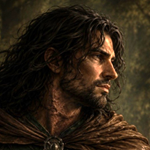
User avatar
Lambe
Posts: 509
Joined: Tue Jan 26, 2010 5:38 pm

Re: Memoirs of a Ranger - Lambe Arkolyn

Unread post by Lambe »

5 - 50

Image

A chance is not always given to the ready.

By the time winter settled fully over the Coast and the year turned to 1350 DR, we still had no proper place to gather after the Purge. I had turned thirty that Nightal, though it did not feel like much of a threshold then. My throat had healed as much as it was going to, leaving a pale seam under the jaw and a pull in the skin whenever the cold got into it. There were too many other thresholds behind us, burned or buried, and too many uncertain roads ahead.

That was the first truth of those months, and it found its way into everything. Reports came by road when they came at all. Sometimes a messenger found one of us. Sometimes word was left with a farmer, a hin, or a passing guard who might know where the Circle had scattered. Other messages waited in older ways: tucked into tree hollows, hidden beneath loose stones, left near shrine markers, or placed wherever folk trusted the Circle would know to look. Meetings happened where they could, if meeting was the word for it. A hearth one night. Wet ground under winter branches another. Once, only the side of a road, with everyone standing close to their packs because no one meant to remain there long. Cloaks stayed damp. So did tempers, at times. More than once I saw someone reach for a thing that had always been kept in the Grove, only to remember that the Grove was gone.

The land did not wait for us to feel ready. Farmers still found strange tracks near their fences. Travelers still brought word of beasts moving where they should not. Old enemies kept to their old habits. Snares still had to be cut loose, sick animals saved or put down, and someone still had to walk out, look at the ground, and decide what needed doing. Grief did not excuse us from that. Maybe the work would have been easier if it had. Maybe it would have been worse.

So we kept moving.

That is easy to write now. It was harder to live. The Circle had been many things over the years, and we had argued often enough over what it ought to be. Druid and ranger, shrine and trail, prayer and patrol, watchfire and meeting stone. But for all our differences, the Grove had given us a center. Even when we disagreed, we knew where disagreement would eventually return. A place can become a habit of the soul if one kneels, works, bleeds, and laughs there long enough.

When it was taken from us, we did not only lose trees and paths. We lost the shape of returning.

That loss showed itself most plainly whenever we tried to gather. A council was no longer something one walked back to. It had to be made wherever enough of us could be found.

I remember one such gathering outside Gullykin, though gathering may be too generous a word for it. We stood near the road with our packs still on, trading what news we had before the light failed. Someone had brought word of an ill-written warning left near one of the shrines. Someone else spoke of the northern blight, and of the first poor steps being taken to heal ground that did not yet want healing. I think one of us had a scrap of map, but the wind kept catching it, and no one had a table to pin it to. There were only cold hands, tired voices, and men trying to decide which trouble could wait.

Vendor Xon stood a little apart at first, head turned slightly toward whoever was speaking, his mouth shut until he had something worth saying.

That may sound like a small virtue. It is not. Men who wish to lead often mistake speech for weight, and wounded folk are too tired to sort every loud word from a useful one. Vendor listened. He took reports without trying to make each report into proof of his own importance. He asked after roads. He asked who had eaten. He asked whether a thing had been seen once or twice, and whether the one who saw it had been scared enough to mistake one beast for three. Then, when he had enough of the matter, he offered what answer he could. Not always the perfect answer, and not always one every voice liked, but an answer all the same.

It was not glory. In those days, it was worth more.

I do not mean he was already what he would become. None of us were. Vendor could be uncertain, and there were moments when uncertainty showed through the seams. He was still finding the measure of those around him, and some of those around him were not easy men and women to measure. We had lost too much to be generous without effort.

The ranger side had already grown thin. Celduil had left the Circle and given up the High Ranger’s place, and for a time there had seemed little point in filling it. In any steady way, there were only three of us who had carried the old road for long: Mendel, Vendor, and me. Three veterans did not need a title between them to know how to walk a road, read a trail, or answer trouble when it came.

Nor was the Circle as empty as those days made it feel. Eowiel had come to us by Ivan’s acceptance, a Doron Amar ranger with her own road behind her and more ahead than any of us knew then. Deacon came near that time as well, small enough to be mistaken for some garden spirit by a tired man in poor light, though I doubt he would have thanked me for saying so. What path he truly walked was less plain to me, and perhaps less easily agreed upon by others. New names were not the trouble. Shape was.

Ivan’s departure changed that. I will not set all of it down here. Some matters belong to those who bore them most closely, and some old arguments do not grow wiser by being repeated. Kaltyra was part of it. Ivan believed she had done her part as a druid and had some claim through the fey. Mendel went to ask the fey directly, and the answer he brought back did not favor her. They had not chosen her, and would not choose an orc while elves still stood to speak. I had my own reasons not to trust her, written plainly enough across my throat by then.

His departure did not only take one more name from our rolls. It left the Circle with too few hands at the top, and too much work still pressing in from every side. I only know that after Ivan left, the empty High Ranger’s place no longer felt harmless.

Old names were spoken, as old names often are when people are frightened and trying to be practical about it. Celduil was sent for. Others were considered. I was one of them. Mendel was another. Some burdens are beyond a man. Some are meant for another. And some, if taken up again, only teach people to keep looking backward.

I had worn the title before. More than once. There was comfort in knowing its shape, and danger in that comfort. A familiar burden can feel like duty even when it is only habit asking to be fed. The Circle did not need me to step into an old place because I knew where to put my feet. It needed someone who could walk the next road.

That chance came to Vendor Xon.

There was no grand ceremony that I can honestly give you. If formal words were spoken, I remember the cold more clearly than the words. I remember hands resting on Vendor’s shoulder or clapping it, and men wishing him the best of luck because there was little else to give him. He was not handed a settled company or a clean road. He was handed scattered names, unfinished reports, and people still looking over their shoulders for a Grove that was no longer there.

That was High Ranger enough.

I watched him take it in. Not with triumph. Vendor was not that sort, or at least not in that moment. He looked more like a man being handed a map whose edges had burned away. There were roads on it still, but not all of them led where they used to, and some of the landmarks were gone. He would have to learn the missing parts by walking them.

A chance can be a kindness. It can also be work handed over before the hands feel strong. Vendor was not given the title because everything had become clear. He was given it because things had not become clear, and someone still had to answer when a ranger asked where to go.

The first proof of him was not in any speech. It came in the days after, when the same work came back around and he did not step away from it. There was a report from the north, a road that needed watching, a new face asking whether there was still a place among us. Old faces returned too, with questions they did not quite ask. Allies came needing help that only half belonged to roads and reports: a shrine troubled by strange signs, a patch of blighted ground that would not mend, a beast that had to be followed but not slain if there was any mercy left in it.

Vendor took each matter as it came, not always smoothly and not always as I would have done it. That was likely part of the blessing.

More than once I caught myself thinking how I would have answered, where I would have sent someone, what I would have asked first. Sometimes I even had the words ready, and most of the time I kept them behind my teeth.

I had spent too many years believing that if I could stand in a gap, I should. Sometimes that belief had served others. Sometimes it had only served my fear of seeing the gap remain empty. After the Purge, there were too many empty places for one man to fill, and trying would have made a poor monument out of me. Vendor’s chance required space. The Circle’s chance required the same.

We were still displaced. That did not change because a title had been given. We still met where we could. We still woke with damp cloaks and stiff backs. We still counted missing voices in pauses no one named. The old Grove did not return because Vendor accepted work, and none of us became whole because someone finally had a rank to answer with.

Still, it was not nothing.

A message came in and found a hand to receive it. A patrol needed sending and found a voice to send it. A new ranger would soon be told where to meet us, and he would not be meeting a memory. He would be meeting men still on the road.

Only later did I understand the shape of it better. Vendor had been given a place among the old names, yes. But the Circle had also been given a way to prove it had not been only its Grove. The Grove had held us, and we were right to mourn it. Yet if we could still answer, still walk, still guard, still pray, still argue over the right thing and then go do the needed thing anyway, then something of the Circle had survived the fire.

Vendor did not make that true by himself. No one could have. Tyn sending word mattered. So did Celduil returning, Mendel walking the roads, Alyndra asking hard questions, the druids tending what could still be tended, and the rangers shouldering packs before dawn. Still, when Vendor took the High Ranger’s burden in those homeless days, the truth became easier to see.

We were not ready.

Neither was he.

The chance came anyway, and by taking it, he helped the rest of us take ours.
User avatar
Lambe
Posts: 509
Joined: Tue Jan 26, 2010 5:38 pm

Re: Memoirs of a Ranger - Lambe Arkolyn

Unread post by Lambe »

5 - 51

Image

Sometimes a home is only a fire kept low and men willing to take the next watch.

Vendor had not been High Ranger long when Llewellyn Swyft’s name first came to us. Titles still sat strangely on all of us then. The Circle had survived the Purge, but surviving did not make any of us feel settled. We had no old Grove to gather in, no familiar roots underfoot, no place where a ranger could come in from the rain and feel he had crossed into ground kept apart from the rest of the world. There was work, and most days that was enough to get us moving.

The country inland from the Gate was full of places that would not leave us alone, even when they belonged more properly to other banners. Triel was one of them. Its fields had been sick too long, and men kept making them worse, but the trouble did not stop at any village edge. It ran along the roads as well, carried by refugees, scavengers, bandits, old soldiers without banners, Zhent remnants, and folk too hungry to care whose purse they cut. There was enough honest traffic to attract dishonest eyes, and enough empty country that a body could disappear without much trouble.

It was in that season of unsettled roads and half-healed ground that Tyn and I first crossed paths with Llewellyn. He did not look like a man asking to be taught how to walk in the wild. He was young, aye, younger than Vendor and younger than me, but not green. Tall, long-limbed, sun-browned, with chestnut hair kept back beneath his hood and a quiet way of watching before speaking. He had the look of a man already used to judging danger for himself.

Tyn handled most of that first meeting. Llewellyn’s interest in the wounded places beyond the Gate was plain enough without making a performance of it. He cared about taint in the ground, undead sign, old harm left untended, and the duty owed to places most folk had already written off. Plenty of men wanted a fight. Fewer had patience for that sort of work. Tyn did not hand every road name to the High Ranger simply because a man could loose an arrow and speak well of trees, but he judged Llewellyn worth Vendor’s attention.

It was a good thing Llewellyn came to us in those early days. Vendor needed rangers to lead, not in the way a lord needs men to stand behind him, but in the way a fire needs wood placed properly. Too much at once and it smothers. Too little and it dies. The ranger side had names enough to prove we were not gone.

Vendor did not make much ceremony of it. He rarely did. He had an easy face for hard roads, and I think that confused some folk. They mistook the smile for softness. They missed the old lumberman’s strength in him, and the habit he had of noticing more than his cheer suggested.

A few days after that first meeting, the three of us took the road as Needles of Mielikki. Vendor, Llewellyn, and I crossed the Chionthar at Wyrm’s Crossing and went east among the unsettled places that still tugged at the Circle’s sleeve. There were old roads, broken settlements, hungry camps, and fields where the dead did not always lie still. We were gone long enough for the road to stop feeling like a passage and start feeling like the place we lived.

Winter had not loosened its hand yet. Breath showed in the low places before dawn, and the road was muddy where it dipped but hard where the cold still held. There were old cart ruts frozen in places, bent grass where deer had passed, and once a blackened fence post standing alone with nothing left to fence. We found no corpses that first morning. In that country, that counted as a mercy.

Llewellyn did not chatter to fill the miles. Vendor did enough talking for two men and somehow did not make it feel like noise. He worked the road as much as the man beside him, letting paths, signs, old camps, blind turns, and slow places show what kind of ranger Llewellyn already was. Llewellyn was careful with what he claimed to know. I liked that in him. Guessing on the road was a bad habit.

We rested first with the Greyfox tribe, among their tents and cookfires, and shared boar beside the flames. They were not a people who had come through soft years. Triel had taken from them too, and the Dark Horde before it, and there was a hard-earned watchfulness in their camp that no guest with manners could miss. Meat was passed, places were made, and little more was offered than needed. That was enough. There are welcomes that do not need much speaking.

Llewellyn watched more than he spoke there as well, which told me as much as any answer he might have given. Some men treat another people’s fire as a thing owed to them. He did not. He took what was given, gave thanks in the manner he knew, and kept his hands and eyes where a guest’s hands and eyes belonged.

From there we went on to Triel.

Triel waited farther along the Chionthar with its ruined walls and old sickness. We found one stone building still standing, likely a tavern once, though there was little cheer left clinging to it. Plague zombies moved among the broken places, not with purpose exactly, but with the stubbornness of harm that had not been answered. After sharing fire with Greyfox survivors, the sight sat heavier than it might have otherwise. A dead thing in a field is grief. A dead thing walking in a field is a duty.

We did what could be done. I will not dress it up more than that. Blades and arrows, caution around the taint, the old ranger habit of checking where one dead thing had stood in case another waited behind a wall. Llewellyn did not rush the work, and he did not shrink from it either. Vendor watched him then in the way a High Ranger watches without seeming to, measuring not only whether a man can fight, but whether he understands why the fighting is needed.

We left Triel behind after that, taking the road northwestward. Alyndra joined us later along the route, quiet in the way druids often are when they are listening to more than the road, and the road carried us on toward Soubar and Boareskyr Bridge. Soubar was the sort of place a man could pass through without being seen, if he had the sense not to ask too many questions or look too long at anyone else’s business. Such places gather travelers, traders, sellswords, runaways, and men who prefer loose law to honest peace. Those names sound clean when written one after another. They were not clean underfoot.

We made camp off the road, not so far that we could not hear wheels or hooves if any passed late, and not so near that any careless sound, stray smoke, or unlucky glimmer would give us away. The place was a shallow fold of ground with a few trees leaning over it and enough brush to break the wind. One of my straps had gone stiff from damp, and I remember fighting with it longer than I should have.

Llewellyn gathered deadfall without stripping anything living. He moved quietly for a man of his height. When he knelt to set the fire, he took his time arranging it small, close, and mean with its light. Not mean in heat. Mean in reach. A road fire should comfort the men beside it, not make a claim on the dark.

He spoke a Dread Prayer over it. Dread Prayers were spoken when a fire was kindled beneath living boughs. The words changed with the speaker, but the asking did not. Flame was invited to warm, guard, and reveal, while being held to what had been given. It was not to take root or leaf, not to reach greedily beyond the stones, and not to throw its light so far that every hungry eye on the Coast could find it. A ranger who served Mielikki did not call fire into the forest without reminding it, and himself, that a fire was useful, but it was still fire.

Llewellyn’s prayer was brief and low. More caution than ceremony. It asked for restraint, for clean heat, for the roots beneath us to be spared, and for the dead to remain untroubled. The part about the dead stayed with me. I had not known him long, but it fit with what he had already shown us.

We ate simply. Hard bread, dried meat, a little cheese that had taken on the shape of its wrapping, and some roots Vendor had picked up from a farmer two days south who insisted they were better roasted than boiled. They were not. Vendor defended them anyway, mostly because he had paid for them. Llewellyn was not a man much given to complaint, even over poor camp food.

The first watch was mine. Vendor took second. Llewellyn took the hour nearest dawn. New men sometimes try to prove themselves by reaching for the hardest task in sight. They want to bleed in front of you, or go without sleep, or volunteer for foolishness before they understand the shape of the work. I had done some of that myself in Tethyr, though I would not have called it that then. Every hard road had felt like a chance to prove Kolandir had not wasted his mercy on me. Llewellyn did not do that. Third watch suited him. It put him nearest dawn, when the cold bites worst and men are most likely to trust the dark because it has not harmed them yet.

We did not sleep long before he woke us quietly, after finding sign too near our camp for comfort. There was no point leaving camp standing behind us, so we packed what mattered, smothered what little fire remained, and left the place as clean as tired hands could make it.

Then Llewellyn showed us what he had found. A small fire had been scraped beneath a tangle of thorn not far west of us, then kicked apart and covered badly with dirt. Whoever had used it was already gone by the time we made our own camp, but not long gone. He showed us the ash first. Cold, but not old. Around it were the marks of three men, perhaps four, where they had crouched or slept with their packs close. One set of prints dug deeper on the right side and dragged slightly after every step. A limp, or a wound. Near the thorn he pointed out cut purse-thongs, a short drag mark through the leaves, and a strip of poor cloth caught where someone had been pulled too close to the briars. The sign did not sit right for honest travelers.

Llewellyn took the lead from there. The poor cloth in the thorn had told him which way to look, and beyond the first patch of scrub the better trail showed itself. The ground there held the limping print more clearly, along with the scuffed steps of men moving faster than they should have in the dark.

Ruined country makes poor bandits. Not the kind with names or banners. Just hungry men with knives, sleeping badly and robbing whoever looks weaker than they are. That does not make them harmless.

We found them on our return through the Trollclaws, before sunrise in a hollow where the brush thickened near a dry ditch. Four men, as Llewellyn had guessed. One limping. Poor gear, poor discipline, and enough weapons to harm the unwary. A pack lay between them, cut open, with a woman’s spare shoes, a cracked comb, two cooking knives, and a little cloth bundle of coins spilled into the dirt.

Vendor could have let us put arrows in them from the brush. Plenty of men would have called that clean work. He did not make it a killing. They were given room to surrender before steel was needed, and most of them took it once they understood they were found. One did not. He came at Vendor with a knife, and I cut him low before it became worse. After that the others lost heart quickly.

Llewellyn bound one man and then helped keep the wounded one alive, working with care rather than comfort. The wound had been earned, but we were not executioners.

We found the woman and her husband half a mile down the road, hidden in a drainage cut with a boy of maybe ten years between them. They had not been badly hurt, thanks be to the Forest Queen, though the husband’s cheek was split and the woman had gone past fear into anger. The boy would not look at us at first. Vendor gave back what we could. The cooking knives mattered more to her than the coins. That is the sort of thing a man remembers.

The boy watched her take them back, still not looking at any of us. I had seen that look too often by then, in places where roads failed and armed men became another thing children had to survive. Children learned quickly when adults failed to keep the world safe. They learned where to put their eyes, how to stand small, and how not to ask whether the next man with a weapon meant rescue or ruin.

She wanted the bandits hanged. I did not blame her. There was no magistrate within reach, no sense in leaving four bodies to sour beside a road already too used to death, and no mercy in pretending anger could make clean law out in the mud. The bandits would not keep their weapons, their stolen goods, or their place near the road.

It was not a perfect answer. We marched the bandits north and west, away from the easy traffic. The wounded one had to be half-carried by two of his friends, which improved no one’s temper. Vendor took their bow, two knives, a hatchet with a cracked handle, and three snares. I took the coins they could not account for and put them with the traveler’s bundle. More stolen coin turned up hidden on one of them.

By midday we had put enough rough country between them and the road that returning would cost them more effort than most desperate plans can survive. Vendor gave them back a waterskin and enough food for one poor meal. It was not generosity exactly. It kept them from making the quickest stupid choice. I do not know what became of them after that. Perhaps one found another road and another purse. Perhaps the rough country taught him better than we could. That was the trouble with mercy away from law. You could choose not to kill a man, but you could not always choose what he became after you let him walk.

I doubt Llewellyn expected his introduction to the Circle to involve Greyfox fires, Triel’s dead, road prayers, and marching thieves through scrubland with a wounded man limping between them. That was how it happened, though. The Circle had no proper Grove to receive him in, so the road did it instead.

We reached our last camp near dusk. Llewellyn checked the ground carefully before kindling the next fire, clearing old leaves from the stones and making sure no root lay too near the heat.

Llewellyn spoke another low prayer when the first thread of smoke rose. We ate poorly again. The roots had not improved. That night the watches passed cleanly. Vendor took the coldest stretch without announcing that he had done so. Llewellyn took his part without fuss. I lay under my cloak, listening to the fire and the small sounds of the road beyond the trees.

We still had no Grove then. No hall, no familiar pool, no path opening under old boughs. We had Greyfox firelight, Triel’s dead, the long road west, smoke in our hair, cold ground beneath us, and watches passed from one tired soul to another. Llewellyn had already been a recent addition to us by then, but that road made it feel as if he had been with us much longer. Vendor had done the work of High Ranger without making much noise about it.
User avatar
Lambe
Posts: 509
Joined: Tue Jan 26, 2010 5:38 pm

Re: Memoirs of a Ranger - Lambe Arkolyn

Unread post by Lambe »

5 - 52

Image

Every deed leaves a mark, great or small, though often only the land remembers where.

We had gotten used to meeting where the space could accommodate us all, our tents, and whatever else we had brought with us. That was the shape of the Circle for a while. Not broken, not gone, but always setting down packs in places that were not ours and gathering ourselves before patrols or new trouble pulled us apart again. Sometimes it was only the weather.

Sharpteeth served well enough for that. It had trees and cover, with room to stand without crowding one another. None of the places we used then felt like the old Grove, except in the faces that still gathered there. Ivan had returned by then, and Athalantiel had come back to the Circle as well. Their return did not make old disagreements disappear, but it certainly made things feel like the same old Circle. Tyn was there often. Alyndra came when she could. Vendor was seldom far from us. I cannot name every face that stood with us at those meetings now, and others came and went as duty and distance allowed.

We were not idle in those months. Mealir had asked for aid on behalf of Doron Amar, and the Circle had helped see to what remained of the Banite temple’s harm in the Wood of Sharpteeth. Its ruins still carried the old filth, but the place was cleaned in time. I do not claim it was a great victory. Some work is only good because something foul is no longer there when it is done, and that was enough.

The land keeps such things longer than men do. Old cuts remained in trunks where axes had bitten them. In some places, disturbing the soil still brought ash to the surface. The Sharpteeth had taken too many marks in too few years, and we had left signs of our own there by then. Camps had come and gone. Wards remained in a few places. We cleared deadfall and buried what needed burying, and our tracks crossed older ones until the ground held too many journeys to separate. Then word came for us to go to the Cloakwood.

The message came through the lizardfolk. Krill’acha is the part I remember clearly. He had survived the Purge as we had, though survival meant something different for his people. Too much had been lost, and whatever remained of their old life in the Cloakwood no longer held them there. They were no longer settled in the woods as we had known them. And as such, their leaving changed the place more than a stranger would have guessed.

We saw it before we had gone very deep. Smaller things moved more boldly. Tasloi sign showed where lizardfolk pressure would once have kept them wary. The wet places carried the heavy crawl of beetles. None of those creatures were new to the Cloakwood. They had been there in the old tales and in the undergrowth before our grief ever touched the place. They were ranging farther now.

The Cloakwood had never been tame country. There were caves folk avoided and old wet dark under the trees. Some things had taken root there long enough ago that even druids stepped with care. Krill’acha led us deeper, where the trees stood close and the air held the damp weight of leaves that had not dried properly in years.

I remember the ease of him in that country, and the oddness of seeing him apart from the old danger that had first bound us together. He was not solemn in the way men become solemn when they wish to be thought important. He watched everything and seemed pleased whenever the way became harder. That fit him.

He brought us to the right place, but the right place did not at first admit us.

Fog had gathered among the trees. Not heavy fog like weather rolling in from the sea, but a pale thickness lying low around root and stone. It smelled of wet bark and old leaves. Sound carried strangely in it. A boot scraping stone seemed close at hand, while a voice from only a few paces away came back dull and uncertain.

We went into it and found the path bending in ways that made little sense. Trees we had passed came back into view. Damp leaves gave under our boots, and low branches dragged across our shoulders as though we had never moved beyond them. After a while we understood that we had returned to ground we had already crossed. We tried again, but it made no difference.

Krill’acha knew more than we did, but not everything. That may be why I remember the moment kindly. He stood looking into the fog much as the rest of us did, and for a little while none of us had an answer. Then the pixie appeared.

It was a small thing, bright enough to catch the eye and quick enough to make following it feel foolish until the fog began to change. Its light flashed against wet trunks and vanished whenever it slipped behind a leaf. It paused just long enough for us to keep from losing it, then moved again.

Once it led, the same ground behaved differently. That told me enough. We had found the place, but finding it had not been the same as being allowed farther in.

We followed the pixie through thicket and low branches, with leaves brushing close enough to wet our sleeves. Much of the way was hidden by growth. There were moments when I saw only the back of the person ahead of me and Krill’acha’s shape near the little light. Fey paths do not always look like paths to men. I stopped trying to make sense of each turn and kept moving.

Then the trees opened enough to show gold.

Not much at first. Just light held farther in, where the canopy should have left the ground dark. The place did not feel newly made. That struck me before anything else. It had been there without us, shut away while we wandered between camps and tried to carry the Circle from one borrowed patch of ground to another.

I had expected relief when we were finally shown the place. Some part of me had probably expected triumph as well, though I would not have admitted it then. What came instead was caution. The old Grove had known us. We had worked there, argued there, buried our dead near it, and left enough of ourselves behind that its loss had felt like another death. This place owed us nothing.

I found myself looking at the others more than at what lay around us. We had come in carrying the old Grove with us whether we meant to or not. Tyn, Vendor, Alyndra, Krill’acha, and whoever else stood there that day had each reached it by a different road. None of us had arrived untouched.

We had not been brought there simply to look. Something was being asked of us before the place would open fully, though I cannot now separate whether it was a condition, a promise, or work still waiting to be done. Krill’acha understood more of it than most of us. The rest came through the pixie and whatever powers had chosen to let us pass that day. One of those powers stood as a pale shape within the golden light.

I knew at once she was not the guardian we had lost. I would not dishonor either of them by pretending otherwise. Nai went to her before the rest of us moved, with the kind of happiness that only comes after loss has taught someone how much a living thing can mean. The pale creature watched her without fear. No one spoke for a few breaths.

The sight of her hurt more than I expected. Not badly. Not like a wound reopening. More like touching a scar by accident while reaching for something else. That was when I thought of Sora.

I wished she had been there. That is the plain truth of it. Many who were gone should have seen the place, but her absence came to me first. Sora should have seen it.

We went on after that. I could not have said whether the Grove felt like ours yet. Perhaps it should not have. Belonging is not always given the moment a door opens, and we had spent long enough without a home that standing inside one did not immediately teach us how to have it again.

Krill’acha made his wish known before we left. He wanted to guard the place and stand with the Circle. Some of it came from what his people had endured. The rest was simply Krill’acha. He liked the work, and danger had never done much to discourage him.

We accepted him. There may have been some ceremony to it, but what stayed with me was the sense that it was right. Someone among us made it plain that Krill’acha would stand with the Circle and be counted among us. No one objected. His people had paid for the old war in blood and fear, and he had already shown what sort of guard he would be. Letting him stand with us there felt less like granting a place than admitting one already earned.

The old Grove was still gone. Nothing in the Cloakwood changed that. Sharpteeth still carried its scars, and the Circle still had to learn how to gather without pretending loss had made us wiser than we were. But the land had kept another mark hidden under leaf and fog. We followed a lizardfolk and a pixie into it, and for the first time we saw the place that might become ours.
User avatar
Lambe
Posts: 509
Joined: Tue Jan 26, 2010 5:38 pm

Re: Memoirs of a Ranger - Lambe Arkolyn

Unread post by Lambe »

5 - 53

Image

Some silences are not empty. They are waiting to be heard.

By late Mirtul, the cold had begun to loosen. The mornings were still damp, and a man could feel the chill if he stood too long in the shade, but the ground no longer held winter as it had before. Leaves had thickened around the shrine paths. Birds made enough noise to cover small movements in the brush, and even the mud had changed, more soft than bitter.

We had a Grove again by then, though that did not make the Circle whole. Some names were gone from our gatherings. Others had returned in ways that no longer fit the memory I had kept of them. Most days there was too much work for anyone to sit long with such things, and perhaps we were grateful for that. Sehlanna Alenuath came back into such a time.

I knew her from older years, when Toshiro still stood high among the rangers and the Circle had a different shape around it. She was a sun elfmaiden, proud in the way some elves are when pride has been with them so long it no longer needs display. She carried herself with grace, but there was little softness in it. Her eyes measured people before she spoke to them, and sometimes after. Rangers were among the few she seemed willing to meet without distance between them.

Her return was harder for that. She did not come back as a stranger, but many in the Circle could only receive her as one. The people who would have known her best were not all there to speak for her. Some had moved on from the Coast, and newer members knew many of the old names only from accounts and half-finished stories. She had expected to be remembered, and instead found herself explaining why she had ever belonged. There were questions about the path she had walked as well.

Sehlanna had been known for Shevarash, and not lightly. Those of the Circle had reason to be wary when old hatred came near the Grove under another name. I understood why the questions were asked. I also saw what each one took from her. She had tried before to speak of Mielikki with Vendor and me, not as one reaching for a sudden answer, but as someone who had already spent a long while questioning the road behind her. The talks had not settled everything, though it was plain she had been moving toward them for some time.

It was later, after that part of her journey had already begun, that I found her watching from the trees near The Lady’s shrine. She was not standing openly on the path. She had chosen cover, and good cover at that. A less watchful man might have passed beneath her and never known she had been there. I nearly did. What caught me was not a sound so much as the lack of one.

A branch remained still after those around it moved. A narrow strip of green showed where the shadow of the leaves should have broken differently. I continued along the path for several more steps before I was certain. Sehlanna was skilled. She did not confirm my suspicions by immediately giving herself away. She had simply remained there long enough for one small mistake to show.

I did not call her out. She had come close enough to observe me, but not close enough to speak, and I did not know whether she intended to. For a while I stayed near the shrine and found small tasks for my hands. I checked one marker stone twice. I scraped damp soil from its base, decided it had been better before, and pushed most of it back. When I glanced toward the trees again, nothing had changed. After a time, I left the path and walked farther into the nearby woods.

It was not far. The shrine remained behind me, close enough that I could have returned without looking for the trail. The ground dipped beyond a stand of beech, where roots had lifted the earth and rain collected in shallow hollows.

I stopped there and waited.

She followed after a little while. I heard her behind me but let her come closer before I turned. She moved well, though not as she would have on an ordinary hunt. Once, her boot pressed loose soil down the slope. Another time, cloth brushed bark behind me. I kept my eyes ahead until she had come close enough that pretending not to know would have been foolish.

By the time I turned, the strength she had used to hold herself together was already failing. She came against my chest and wept. I stood there for a moment before putting one arm around her.

The other hand caught awkwardly at her shoulder before settling between her back and the edge of her cloak. I was slow to find a comfortable way to hold her, and the armor did not help. Her fingers caught in my cloak. I felt the wet warmth of her face through the cloth beneath my throat.

At first, I could not make out much of what she said. The words came broken by breath, sometimes in Elven, sometimes in Common, and more than once she began again before finishing what had come before. I did not ask her to slow down. The Circle she had returned to was not the Circle she remembered.

She had wanted family, or something near enough that the word would not shame her. Instead, she found missing faces and people who did not know why her name should carry any weight. She pulled back once and wiped at her face with more force than was needed. I thought she was finished. She looked toward the shrine before saying Toshiro’s name. Then she told me about the child. She had borne his child and carried much of what followed without him. I do not recall every word she used, and I am not certain she said all of it plainly. She avoided parts of it, and her voice changed whenever his name returned.

That changed the old memory of Toshiro for me without erasing what I had known. He had been a ranger of weight, but there was more beside it now, whether I wanted it there or not. I did not press her.

Her words drifted as my own shortcomings came back to me, try as I might to put them aside. Flora had sailed for Waterdeep while carrying our child because I had remained behind to finish what duty still held in front of me. I had meant to follow. For years, I had kept that sentence ready, as though intention could lessen what came after. The two losses were not the same. I knew that, though the knowing did little to stop one from touching the other. I said none of it to Sehlanna. For a while, there was only her breathing and the leaves moving above us. Somewhere nearer the shrine, a bird called and received no answer.

Her grip on my cloak loosened before she finally stepped away. She would not look at me. She busied herself with the edge of her cloak and the loose hair around her face. Her hands were steady by the time she finished, and I pretended not to notice how long it took. The shrine could not be seen from where we stood, but she kept glancing toward the way back. I almost told her there was nothing to be ashamed of, but stopped.

I could not give her the old Circle. No one could. The new Grove was real, and the work ahead of us was real, but neither could call back every person who should have been standing there to receive her. So I remained with her until she was ready to leave. Before we parted, I told her she might have to prove herself again, as others returning after a long absence had done. In time, she would take the trials once more.

Afterward, I returned to the shrine and went back to the small work waiting there. I cleared leaves from the marker stones. I checked the softened ground for tracks and found the prints of a fox that had passed during the night. At some point, I realized I had inspected the same stone more than once. There was always another path to watch or camp to mend, and I had spent years looking outward because the world had need of me.

But there was another country I had left unattended, and not all of it lay on any map. Sehlanna had come back from absence carrying more than any roster or question of faith could show.

Standing with her among the trees, I began to understand that I had done much the same inside myself. I had guarded the road ahead because it was easier than looking too long at what I had left behind.
User avatar
Lambe
Posts: 509
Joined: Tue Jan 26, 2010 5:38 pm

Re: Memoirs of a Ranger - Lambe Arkolyn

Unread post by Lambe »

5 - 54

Image

Balance is easiest to speak of from a cool place.

I remember the heat first. That may be unfair to Ivan, who was the reason we went, or to Mendel, who likely kept the order of that matter better than I did. Memory does not always keep a clean trail. Sometimes it keeps sweat under the armor or smoke in the nose. The feel of a bowstring checked twice because the air itself seemed ready to ruin it leaves an apprehension that stays with you for a long time.

We had been preparing for a patrol northward, toward the Misty Forest, when Mendel noticed Ivan standing apart in thought. Ivan had strange ways about him even on ordinary days, so that alone did not alarm us at first. Then he told us he had seen something. The balance at the Sunset Mountains had been disturbed, and we were to go look.

Nai had some remark about mushrooms. The words are gone, but it was exactly the sort of thing one says when a druid speaks of visions and everyone else is deciding whether to be worried. Ivan denied that mushrooms were involved that day. The vision remained strange enough, and the rest of us started gathering our supplies.

Ivan, Catam, Berea, Nai, Mendel, and I went. We used the old ways to come as near the Sunset Mountains as we could, but no spell placed us neatly where the trouble waited. There was still climbing after that, and heat rising where mountain air should have been cold. Stone gave off warmth under the boots and smoke moved in wrong places. Farther up, fire showed where no camp should have been.

At first we came upon giants and salamanders fighting. Then the slope opened toward greater violence near the peak, and it became harder to tell what we had walked into. Fire elementals moved through the burning ground while efreeti fought among fire giants and salamanders. From a distance, none of it held an order a man could trust. Above them, black wings cut across the smoke, too large to mistake for rumor.

When the black wyrm turned through the fire, I saw no blind rage in its eyes. It watched the fighting below and chose where to strike with the patience of something that understood exactly how much stronger it was than anything around it. There was cunning in that gaze, and perhaps amusement as well. I noticed it then without understanding what it meant.

We came upon the wyrm fighting every other force gathered near the peak. Circle instinct, in all its wisdom, told us to go straight for the greatest threat, so we went for it. We struck hard enough that it eventually took wing and left the battle behind. At the time, we accepted that as a victory. The mountain still shook with other threats after it was gone, and none of us had much reason to question the matter more closely.

There was one efreeti left alive enough to speak. Mortally wounded, but not yet done. From him we first learned of the pact. Something had been made or agreed to that would upset more than one mountain range if it was allowed to stand.

The dying efreeti pointed us toward a rift, and we went through. What followed is less clear in its order. I remember crossing into a different kind of heat. After that comes the broad plaza, crowded with efreeti who scarcely paused for us. Beyond it stood a great structure of brass and worked stone, where those with authority heard what had happened.

They told us more of what they feared. Sharing an enemy made the efreeti useful allies for the moment, nothing more. They had their own order and their own reasons for wanting the salamanders broken. Still, the threat was real. The pact tied their trouble to the mountains we had come to protect, and leaving it alone would have meant more fire bleeding where it did not belong.

A relic came into our keeping, or into Mendel’s keeping more properly. It belonged to that plane and would let us cross again. That was reason enough to keep it close and ask Mendel not to lose it.

The days after were spent in preparation rather than wonder. I saw to arrows that would bite with cold. Ice arrows, some would call them. I cared less for the name than for whether they would strike true when everything around us wanted to burn. They were expensive by the bundle, as most enchanted arrows were, and I had to purchase them from my own coffers. It led me to wonder whether the Circle would ever keep funds for such things. Balance, it seemed, did not provide its own ammunition.

Bowstrings and straps were checked. Glue could soften in the heat, while feathers and leather had their own ways of failing. The others saw to protections against fire and heat, using every ward and potion they thought might keep flesh from cooking inside armor.

The second venture is less orderly in my memory. Mendel had the relic. Ivan, Eowiel, Nai, Berea, and Vendor were there. Other friends of the Circle came with us as well, though I cannot set down every name as if I held a roster in my hand.

Mendel kept the relic wrapped until we reached the weak place between realms. When he uncovered it, the air around his hands bent strangely, as if the cave beyond had already begun before we crossed. Ivan worked beside him, and then the way opened.

We crossed into the fire again. We did not return to the grand hall or the plaza full of watchful efreeti. The way opened into a cave network with heat trapped in the stone.

There are few useful comparisons for the Plane of Fire. A forest fire still has smoke moving with the wind and earth beneath it that remembers rain. That place had neither comfort. Light came from the stone itself, from cracks underfoot and dull veins running through the walls. The air shifted without cooling, carrying heat from one part of the cave to another. Even the shadows looked scorched.

I tried more than once to judge direction by the glow or the movement of the air. Neither gave me anything useful. A passage that seemed brighter might lead toward an open chamber or toward stone hot enough to soften metal. Distance was no better. Heat bent what lay ahead until a figure could seem close, then remain several bowshots away.

Sound carried poorly through it all. Smoke and glow played their own tricks, and the deeper we went, the more the caves felt inhabited by creatures that belonged there. Their reach into our mountains had become a threat, though within that plane we were the ones walking where we had no natural place.

The heat dried the throat faster than water could answer it. Eyes stung and metal burned under the hand. Tempers shortened before anyone noticed. Even with protections, breathing became work. Sweat did little good. Thoughts slowed unless a man kept hold of them.

We had been broken and put back together as best we could after the Purge. In that place, with the heat pressing through every ward and strap, it felt as if we were being tempered. In simpler terms, we were being made well-done.

The salamanders attacked as soon as we entered their caves, and whatever questions we carried about our objectives had to wait until we survived them. Some fell to spells or blades. Others fell to arrows that hissed cold against bodies made for fire. The strongest waited deeper in, a queen or nest-mother, or whatever name properly belonged to her kind.

Before we reached the deepest chamber, the druids renewed what protections they could and the rest of us checked our weapons again. Ivan took the shape of a dragon once the passage widened enough to hold him. Mendel and Eowiel kept their bows ready, while Vendor watched the ground ahead for room to close. Berea stayed in her own form with scimitar and shield, carrying enough magic upon her that the air shifted around her when she moved.

The salamander was larger than the others by enough that the chamber seemed built around her. Her spear reached across most of it, and her tail struck wherever the spear did not. Even Ivan’s weight did not hold her still for long.

Mendel and Eowiel loosed arrows while there was room for it, and I fired with them. My first ice arrow shattered against the matron’s scales. The next struck lower and broke apart without slowing her. Vendor held back with us at first, watching the reach of her spear and waiting for room to close.

Once Ivan and Nai had her attention divided and the chamber became too cramped for clean shots, the other three rangers drew their paired weapons. Vendor followed with two blades of his own. They pressed in together, each taking whatever opening the others made.

Berea came in behind her shield with her scimitar ready, layered in every protection and strengthening spell she could manage. She had always been sparing with her shapes, preferring her own judgment and skill until danger left her little choice. Her footing stayed measured, and her shield rarely drifted from where it belonged. The scimitar went where she meant it to. The matron’s reach forced everyone into ugly work eventually, though Berea made it look less ugly for as long as she could.

The wards around us began to fail once the matron pressed close. I felt mine go when the metal against my chest suddenly became too hot to bear. Someone called for us to fall back, but there was nowhere useful to go. The passage behind us was crowded, and fire had risen across one side of it.

I kept firing wherever the others left me a line. One arrow sank beneath the matron’s arm when she raised her spear, and frost ran across her side in a white crackle. She turned toward me at once, which was less satisfying than I had imagined when purchasing them.

Image

I gave ground until Ivan struck her from the side and drew her back. The three rangers closed, and another ice arrow found her when she turned.

She turned toward me again.

Her tail struck the stone where I had been standing and broke a piece from the wall large enough to kill a man. After that, I stopped considering what the arrows had cost and began to wonder whether hurting her quite so reliably had been wise.

That became the pattern for much of the fight. I would draw her away, someone else would force her to turn. Each time I thought her attention had settled elsewhere, frost would break across her scales and remind her that I was still there.

There were others with us. I can still place movement at the edges of that fight, weapons and spells coming from beyond the smoke, but not every name has stayed where it should. Ivan held her long enough for the rest of us to keep attacking whenever an opening appeared. At some point she stopped answering us, though it took several breaths before anyone believed she was dead. When it was done, only the nest remained.

There were eggs farther back in it. I did not count them. Someone asked whether we should destroy them. At the time it seemed likely enough that we should. We had just killed their mother and most of the salamanders between us and the entrance, and leaving more behind did not feel sensible. Ivan said no.

Eowiel moved nearer the nest and looked over the eggs before agreeing with him. They belonged to that plane, whether the efreeti wished them gone or not.

There was arguing after that, though not much at first. We were tired, and the cave was still hot enough that nobody wished to stand there longer than needed. The efreeti wanted the salamanders broken. That had become plain by then. We still had to judge their wishes for ourselves.

A younger version of me would have seen folly in leaving a danger behind after fighting so hard to reach it. But that Lambe had not yet seen lizardfolk stand beside us when our interests met, or watched their departure leave room for another threat to settle where they had been. Removing one danger does not leave a place empty for long.

The eggs would remain where they were. The salamanders might become our problem again. If they did, we would deal with them then.

Some may have hatched into trouble later. I expect some did. We knew that when we walked away.

The work in those mountains was not finished. Rifts still needed closing, and other dangers remained among the peaks. The black wyrm we had driven off earlier found us again before long. Only then did I understand what we had faced on the mountain. It was an elder wyrm, old enough and powerful enough that our first attack had scarcely troubled it.

Its presence struck before claw or breath did. The pressure of it drove us down, and fear followed so quickly that for a moment I could scarcely force my body to answer me. It left us little room to pretend we were bargaining. We did what it demanded because surviving long enough to refuse another day seemed the wiser course.

That was when I understood our first encounter differently. We had made ourselves troublesome enough that it chose to leave. Whatever effort the first fight had cost us, I doubt it had amounted to much in the wyrm’s reckoning.

I remember enough of the second encounter to know I have no wish to relive it more carefully. That came later. On the day we killed the matron, we left the caves behind us with the eggs still where they belonged. I watched the passage longer than I needed to, but nothing came after us.
User avatar
Lambe
Posts: 509
Joined: Tue Jan 26, 2010 5:38 pm

Re: Memoirs of a Ranger - Lambe Arkolyn

Unread post by Lambe »

5 - 55

Image

To hold fast is to bear the weight of every pull.

That sounds simpler than it is. A man can make a fine oath of such words when nothing is leaning on him. He can speak of duty and conviction while the road is dry and the bowstring quiet. The truth comes later, when someone else’s grief ends up in his hands and begins testing whether he meant any of it.

Desrah Asher first came to me near Mielikki’s shrine. She was hardly the first person to seek me out at one shrine or another, and she would not be the last. Those places have a way of fixing a meeting in the memory. Perhaps it is the quiet, or simply that a man knows why he was standing there when someone found him.

She first came with accusations against Ivan and, through him, the Circle. She believed we had been involved in an attempt on her life. Someone was with her, though I no longer remember who. At first, I listened and told her plainly that the charge had no ground beneath it. The argument might have remained there if one of them had not said or done something at the shrine that I took as disrespect toward Mielikki. I cannot remember the exact offense now. I remember only that my patience ended and my hand went to my blade.

That was enough to change the tone. Desrah drew the matter back before it went further. She saw I would argue the accusation, but I would not stand quietly while someone showed contempt for the place where we stood.

When she returned later, Aaron Lyonaler was there, along with one of her crewmates. Aaron was a paladin of the Red Knight and, at the time, a Knight Commander of the Silver Rose. I cannot remember whether he came with Desrah or happened upon us, but his presence was welcome. She had come to admit that she had been wrong about Ivan and the Circle. Havarn, a Malarite, was tangled through the matter, along with murder and the sort of trouble that spreads once faith and blame are pulled into it. Desrah brought something near an apology and, after that, began bringing word she thought might help us. There were Malarites involved, Netherese writing, and a dangerous artifact. I remember enough to know she was trying to make amends, though I could not put the whole matter back in order now.

The effort counted for something, though it could not settle everything that had brought her there. The apology was not the last I saw of Desrah.

I kept my guard with her from the start. She returned often enough that those first accusations eventually became only the beginning of what passed between us. Sometimes she saw the guard. Sometimes she only saw that I had not walked away, and people hungry for kindness often confuse the two. I trusted the tracks more than the traveler. I watched what repeated and what held when it cost her something.

Desrah had motives. I knew that much. Most folk do. I made hers my business only when she brought them to my door or to the Circle’s. When she did, I answered plainly. I gave her my time because I chose to give it. She did not pry it from me or bind me to it. If she had wished to harm me, there had been simpler ways and earlier chances. If all of it was some long design, then she had chosen a poor mark, for I knew by then which loyalties I would keep with or without her in my life. I would have died on those convictions if it came to that, and if Desrah found them troublesome, she was welcome to try and bite my second throat out over it.

That may sound confrontational, and by my reckoning it is, but these are my memoirs, and I can write whatever the hells I like in them.

One of those visits turned into an argument about the Circle. Desrah thought we ought to take a greater hand in the affairs of the Coast. I have forgotten the trouble she first pointed toward. She carried enough of them that one desperate matter often blurred into another. Before long, her argument had grown beyond it. The Circle should involve itself more and answer sooner.

Folk spent the Circle’s strength easily in their own minds. They saw the trouble before them and thought our refusal to run at it meant we were standing still. Perhaps from where they stood. From where I stood, the years had been one long march with too little sleep between alarms.

I did not bother defending the Circle to her as if it stood accused in some city court. The Circle was no knife to be drawn whenever the Coast showed its throat. We kept to the wilds and the old charges that came within our keeping. We were aware of what happened beyond those bounds. We simply could not spend ourselves on every shout and still be standing when the cry meant for us finally came.

Desrah disliked that answer, which did not surprise me. She had been shaped by a life where delay often meant someone else moved first. More of that came later, in rough admissions about her childhood and the names she had worn because being herself had once been dangerous. I had already seen some of it in the way she watched doors and tested kindness for hidden hooks. What surprised me was that she eventually spoke of it plainly.

That changed how I advised her, though some answers remained hard. Desrah often wanted relief from a knot while keeping both hands closed around the cord. I told her so when patience thinned. Sometimes she needed comfort. Other times, she needed the truth she least wanted to hear.

She began making some of my concerns her own as well. I noticed that slowly. A person who lives by masks may still offer help sincerely, and a ranger who has survived long enough should be careful before calling every kindness a trap. She brought information when she thought it mattered and asked after the Circle even when she did not understand it. Her questions about my faith could be respectful or sharp.

That was the strange thing between us. She was used to slipping around guarded places, and I was a guarded place that chose when to open the gate. She told me more than once that I was the reason she kept coming back. I heard her, though I did not take it as seriously as I should have.

Over time, the meetings became easier. She still came with questions and troubles, though sometimes neither of us seemed in a hurry to reach them. Once, I remember her picking dried leaves from the shrine’s base and around the flowers while we argued about something I have otherwise forgotten. That stayed with me for no good reason.

One late Marpenoth evening, we were near the Friendly Arm Inn after leaving the road and caravan stops behind us. The Inn had trees enough around it for privacy if one knew where to stand, though it was no forest. Wagon wheels and voices carried through the trunks from somewhere behind us, softened by the distance. I remember a mule making an awful noise near the road and Desrah glancing back at it before looking at me again. We had been speaking, though I no longer remember of what. What I remember is the pause that came after, when neither of us moved to fill it, and Desrah leaned toward me and kissed me.

She was hesitant in that moment. That is worth saying. Desrah could be dangerous and practiced when she wished to be, though the kiss itself was small and unsure, as if she had reached for something before deciding whether she had the right. I let it happen.

More than that, I returned it, briefly. I will not dress that up as charity or pretend I was stone. It had been a long time since I had felt a woman in that way. There was warmth in it. The grief came afterward, or perhaps it had already been there and I only noticed once I had something to compare it against.

Then I stopped.

I pulled back before the moment became a promise. I do not remember my exact words, but I remember what I meant. I told her I could not give her what she was looking for. Maybe she lowered her eyes. Maybe she tried to hide how much that struck. Memory is unkind in some places and merciful in others. I remember the quiet after more than her face.

The kiss left me less room to wonder what her visits had become. She wanted something from me, though perhaps even she did not know its full shape. I had to answer more plainly than before.

I hope that answer did not make me cruel. I cared for her, though I would not follow her into the life she imagined. I wanted her to stop choosing doors that opened onto the same pain and learn to be Desrah Asher without needing every room to prove she existed. That was as far as I could honestly go.

I think she changed me all the same, though I did not understand that at first. I thought she was the one changing while I was only doing what I had always done. I knew I was wounded. I had known that for years, though I had worn grief so long that I sometimes mistook it for the whole of me. Flora’s absence remained where it had always been. I had lived with the loss so long that I had forgotten I could still feel that kind of warmth from someone.

For a time, I held because I chose to. When the pull became more than I could answer honestly, I let it go. I cannot say I handled every part of it well. In the end, Desrah went on with what was hers. I remained, as I had through all the years before her.
User avatar
Lambe
Posts: 509
Joined: Tue Jan 26, 2010 5:38 pm

Re: Memoirs of a Ranger - Lambe Arkolyn

Unread post by Lambe »

5 - 56

Image

Tether yourself too long against the current, and it will pull you under sooner or later.

I stood there longer than I meant to, watching the river work toward its mouth. The Chionthar was grey that day, slow enough on the surface to lie about its strength. Late autumn had stripped much of the color from the bank. Reeds bent near the water. Mud took the shape of my boots and kept it after I stopped moving.

Berea had followed me a short way from the path, keeping to the harder ground where the mud thinned. When she saw I had stopped, she waited for a while before coming close enough to be heard over the river. Then she asked if something was wrong. A few years earlier, I might have answered that differently. Not that day.

We had not come north for my sake. Berea had business with others beyond the Circle, matters that had been raised beneath our own trees and could not be settled there. The meeting was to be held near Ulgoth’s Beard and would likely take most of the day. I had been near the pond when she was about to leave the Grove and asked where she was going.

I had spent much of that morning doing nothing useful. The pond carried water down from a falls and out of the Grove. Leaves gathered near the bank for a time before the current carried them on. The weeks before had given me more to think about than I wanted. They had left me wondering what future lay ahead of me.

When Berea told me about the meeting, I offered to accompany her. She did not need an escort, but another pair of eyes on the road would do no harm. The Circle’s business concerned me as well. More than that, I was tired of standing beside the pond.

We left before the morning was far along. Berea carried enough for the road and the meeting. The river stayed near us for much of the journey. Once we reached its northern bank, we followed it west toward Ulgoth’s Beard. At times the path climbed and we lost sight of the water below us. At others we walked close enough to hear voices from boats passing farther out. The road was soft from earlier rain, and we had to leave it once where a wagon had cut the ground too deeply.

Berea spoke about the meeting as we walked. Some of the concerns were familiar. Others had grown from old disagreements that no one had settled when they had the chance. I listened and gave her my thoughts where I could, though I doubted anyone had asked for them. After a while, I stopped hearing much of what she said. Whenever the path opened toward the Chionthar, I found myself looking out across it. I thought first of the sea and how little it had returned to me.

My hand went beneath my tunic before I had decided to reach for anything. The locket was still there. It had been taken from me once before, and for a few days my hand had found nothing beneath my tunic. I had carried it for years by then. Most days I noticed it only when it shifted or struck my chest. I had kept it because it had been hers, and for a long time that had been reason enough. Somewhere along the years, that had changed. Keeping it was no longer helping me remember Flora. I was carrying it because I was afraid of what letting it go might mean. By then, I had stopped wondering whether I would go through with it.

When we reached a place where the bank was clear, I asked Berea to follow me down. The ground dropped more sharply than it first appeared. I went ahead and tested each step before putting my full weight on it. Berea kept behind me until we reached the flatter ground near the reeds. There was mud along the edge of my boot by then, though not enough to slow us later.

I stood there with my hand near the chain and said nothing. A few steps behind me, Berea waited. That was the moment she asked her question. I told her nothing was wrong, only that I wanted her there as witness. She gave a small nod and stayed where she was. She did not ask what I meant or come any closer.

The chain caught beneath my tunic when I reached for it. I worked it free and held the locket in my palm. The metal was cold from the air. There was a worn place along the chain where it had rubbed against itself for years. I thought about opening it, though there was no reason to. Instead, I closed my hand around it once and threw it past the reeds. The locket struck the river and disappeared.

Berea did not speak at once. She watched the place where it had gone down, then asked what I had thrown. I told her it had belonged to my late wife. She had been lost at sea years before, and losing her had eventually brought me to the Coast. I gave Berea no more of the story than that, but the way I told it with such finality was new to me then. I was finally sure of my words. When she asked why I had thrown it away, I told her I was letting go.

Berea smiled a little. She did not make more of the answer than I had given her. Her meeting still waited, and we still had road ahead of us. I checked the mud on my boots and climbed first so I could give her a hand if the ground shifted. She managed without it.

Once we were walking again, my hand went to the place beneath my tunic where the locket had rested. I felt cloth and nothing more. This time, I had chosen the absence. I had spent years holding myself in place because I knew how to endure there. Letting go did not tell me where I would end up. It only meant I was willing to move again, and perhaps find quieter waters than the ones behind me.

The habit returned twice before the day was over. I thought of Flora as well. That did not change because the locket was gone. I remembered her as I had before, and the memory remained mine without the chain around my neck.

Berea and I reached the meeting before dusk. She went in with her papers, and I found a place outside where I could wait without being in anyone’s way. We did not speak of the locket again.
User avatar
Lambe
Posts: 509
Joined: Tue Jan 26, 2010 5:38 pm

Re: Memoirs of a Ranger - Lambe Arkolyn

Unread post by Lambe »

5 - 57

Image

A fountain begins deeper than the stone that catches it.

I had just come back from the spell when I heard the water again.

That is how it felt, at least. Commune with Nature does not take a ranger out of the world, but it can make the world wider than his own breathing for a while. The roots, the cold soil, the sleeping things under leaves, the trails pressed into mud, the old fear of prey and the hungry patience of hunters. All of it had a voice of a kind. None of it spoke like people do, which is often a mercy.

The Reaching Woods answered as woodland answers. There was no gnoll warband closing on Eldath’s shrine. No flind moving through the near dark with others at its back, no sudden press of bodies coming through the trees. That was good to know. It was not enough to make the place safe.

The woods were still the woods. Predators moved where hunger took them. Old tracks crossed older ones where the ground held prints. There were places where the small life had gone quiet for reasons worth respecting. A shrine could stand in such a place and still be watched by unfriendly eyes from farther off. Peace did not make teeth vanish from the dark.

I let the last of the spell settle and opened my eyes to the fountain. The basin was colder than my hand. Leaves had gathered along one side of it, dark and wet where the water touched them. A little skin of ice held near the edge where the flow did not reach strongly enough. The sound was gentle, almost too gentle for the mood I had brought with me. Water rose, spilled, gathered, and went on. Eldath’s shrine had not been broken.

That was why I had come.

Word had reached us of Silvanus’s shrine being despoiled. I had seen Mielikki’s with my own eyes, and that was worse in the way personal things are worse. I frequented that place. I knew how the ground lay near it, where folk stepped when they came to pray, which offerings were weathered and which had been newly left. Seeing it broken had put a heat in me that the cold did not answer.

Anger can be useful if a man does not let it drive. Mine did not need to be loud. I knew the sort of courage it took to strike harmless places when no one stood nearby. Very little. Those who do such work prefer empty hours and unguarded stone. They are fond of proving themselves against offerings, basins, carved signs, and quiet ground. They are less fond of proving anything when someone is waiting in the dark with a bow and a clear view of the approach.

So I went to Eldath’s shrine. If it had fallen too, I would know. If it still stood, I would watch. So, I watched. I took position from a distance at first, assessing the place for a while. I did not do it from the shadows or cover. I had nothing to hide. Making your presence known often is enough to dissuade ill action. If I was being watched, I never found out. The place was as peaceful as it had always been. After a time, I went closer.

I cleared the leaves from the basin first. Not all of them. Enough that the water could move cleanly where it had been caught. My fingers went numb faster than I liked, and I wiped them on my cloak before checking the ground around the stones. A small offering had been knocked onto its side, perhaps by wind or an animal nosing close. I set it upright. Then I walked the near edge of the clearing, reading what the soil had kept.

There was nothing clean enough to hang certainty on. Deer had passed. Something heavier had crossed the lower ground days before and left only a poor mark after frost and damp had worked at it. A fox, likely, had taken interest in the place where old food had been left. No boot tracks came fresh from the deeper trees. No gnoll prints. No dragging marks. No stink of a camp near enough to ride the air.

I made one more circuit of the clearing before settling near the fountain. There was nothing in the tracks that told me enough, and the woods beyond them held more ground than I could watch with my own eyes. So I knelt beside the basin and put one hand to the cold earth. That was how I began my Commune with Nature.

When I came back from the spell, the fountain was the first thing I heard. I opened my eyes, rose from beside the basin, and kept watch. Nobody came. That did not surprise me, though it saddened me more than I expected. A shrine seems lonelier when one waits beside it and learns how easily the world can pass without kneeling. Yet I knew better than to judge the faithful only by who came on a cold day in troubled woods. Some had homes to keep, and some had already learned caution the hard way. They would make time when time allowed, I’m sure. Still, the fountain sounded very small at times.

I stood with my back near one of the larger trees and watched the lines between trunk and shadow. Every so often I crossed the clearing again, more to keep warmth in my legs than because the tracks had changed. The basin caught what rose from beneath it and gave it a shape a person could recognize. The basin and the stone that held it, even the place itself, it all mattered. A ranger who says otherwise has not watched people return to the same patch of ground because it is the only place where their grief or thanks knows what to do with itself.

Still, the stone had not made the water, and that thought came slowly, helped along by the sound of it. The basin gave the water a rim and let it be heard. It gave hands somewhere to hover over it. The water itself belonged to something below the visible work. It had found a way up before my arrival, and it would have done so if I left before dawn.

Eldath did not need me there. Not in the way anger first wanted to believe. Her peace was not waiting on Lambe Arkolyn to keep it alive through one winter watch in the Reaching Woods. The shrine might need tending and the clearing might need a wary eye. Anyone who came there might need the comfort of finding it whole. Those were real duties, and I did not set them aside. I had been giving my part in it too much weight.

The same was true elsewhere, though it took me longer to admit because Mielikki’s broken place sat closer to the bone. Her shrine was dear to me. I would have mended it with my own hands if that had been the work before me. I learned later that Desrah had paid a proper sum to have it remade by artisans. She did it quietly, with no demand that her name be set beside the work. I have always been grateful for that. It was more than coin spent on stone. It was solidarity, and I did not forget it. But the Lady of the Forest had never been contained by one carved image on the Coast. Her first shrine was not stone or shaped wood. It was the living wild, the path under boughs, the mercy of a clean kill, the shelter given instead of taken, and the long work of keeping the forest from becoming only hunger or only fear.

Silvanus was larger still. Whatever had been done to his shrine, the old wild had gone on around it. The trees had not bent to the insult, and the creatures in them knew nothing of it.

I went around the clearing once more before returning to the fountain. Nothing had changed. The same water came up through the stone and ran over the same edge, whether I understood it or not.

The basin mattered. So did the hands that cleared it and the people who came there to pray. A Grove could hold that for people. So could a Circle, for as long as they kept returning to it. I found that faith was like the water flowing out and being gathered. Perhaps that was what the faithful were meant to do. Gather.

None of them were the source. I think that was what I had been slow to understand.

I thought of the Circle then, as I often did when trying not to think only of myself. I had nobody else on the Coast, really. The Circle had roots again. It had enough life in it to argue, which is not always pleasant but is better than silence after ruin. Vendor carried the High Ranger’s burden. Berea was out speaking with others. Sehlanna had returned to us by a road I had not expected. The Grove no longer felt like a thing waiting to collapse if one man took his eyes from it. It will stand with one less ranger, and the thought came without drama. Maybe that is why I trusted it.

I looked from the fountain to the dark between the trees, and for the first time that night the broken shrine of Mielikki was not the only forest-place in my mind. Her charge was not only where I had last knelt. It was not only the Cloakwood, not only the paths I knew along the Coast, not only the work that had kept me near Baldur’s Gate through so many seasons of blood and rebuilding.

There was another forest under the same Lady’s care, far south of where I stood. I had turned thirty-one earlier that month, and the Wealdath was older in my memory than the Coast, though I had spent years making it quieter in me. The Wealdath had been there before I ever learned the Sword Coast’s trails. It had held the first shape of my service, and the first losses that drove me away from it.

The fountain kept rising behind me while I watched the trees.

Nobody came to break it that night. Nobody came to kneel either. By dawn, there would be no tale worth boasting of. I had cleared a basin and read old tracks, then spent the hours keeping my hands from freezing while I stood where my faith had put me, and that was enough.

I had come to guard a shrine because I was angry over broken ones. I left with a quieter understanding, and quiet understandings are often the ones that trouble a man longest. The Lady’s charge was larger than her symbols. If her forest was the truer shrine, then I had been away from one of her old shrines for a very long time.
Post Reply

Return to “Character Biographies and Journals”